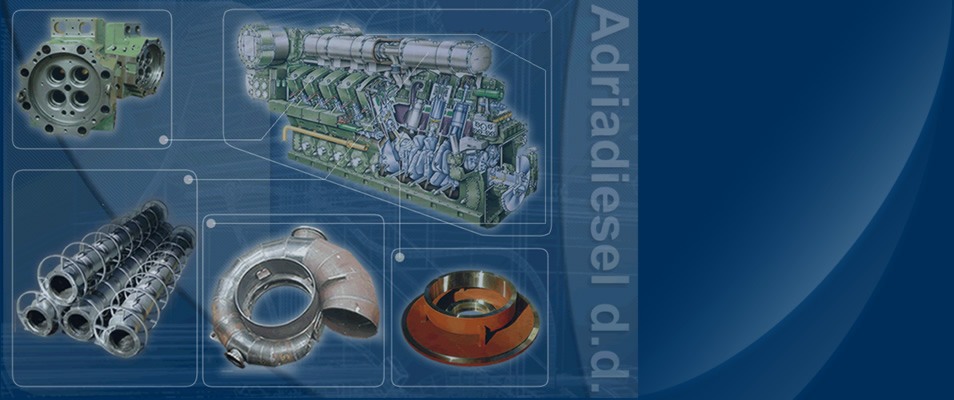
Diesel Engines

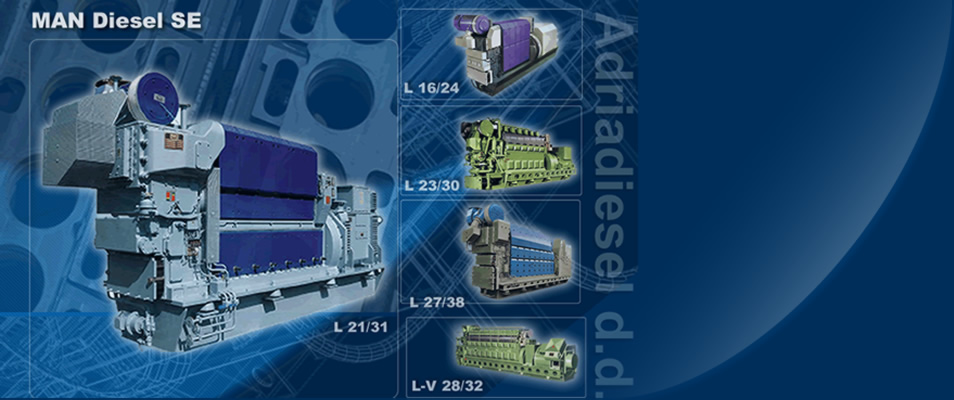
Adriadiesel d.d. presently produces diesel engines and other power plant equipment, as well as spare parts for ADRIA 40 and MAN Diesel SE fourstroke diesel engines.

Spare Parts

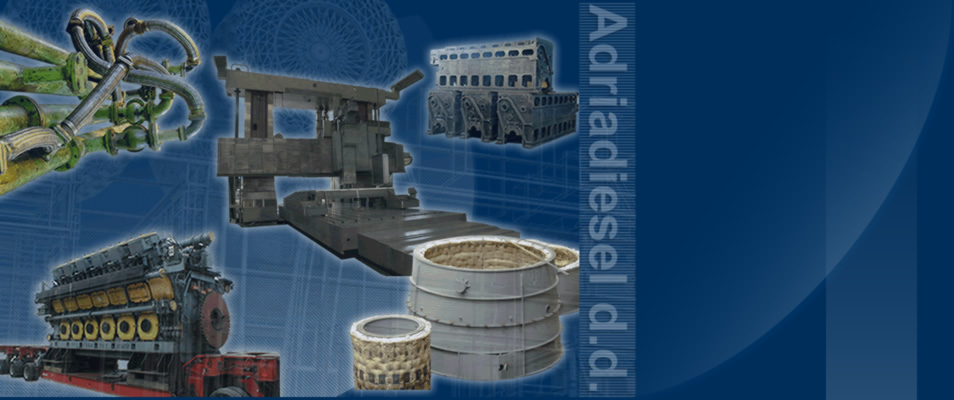
Adriadiesel d.d. produces spare parts for diesel engines in our production line by MAN Diesel SE licence. Adriadiesel d.d. produces spare and substitute parts for engines produced by ADRIA 40 licence since 1955.

Services and Overhauls

Adriadiesel d.d. provides maintenance and servicing of diesel engines, compressors, pumps and other power plant equipment. General overhauls, repairs and servicing can be carried out on spot or in our factory, where engines are tested on our test bed.

Adriadiesel d.d. - ex. Jugoturbina

Rate this item
(3 votes)

Adria 40 & MAN Diesel Engine Service & Repairs Worldwide: 60 years of experience

To whom it may concern:

We would like to offer the following products:

  • Medium-speed four-stroke MAN engines (500 kW – 3000 kW)
  • Large / ADRIA-40 engine (6.3 MW)
  • CPP (containerised power plants / diesel-powered generators) (500 kW)

and services:

  • spare parts for Adria 40 and MAN diesel engines
  • troubleshooting, maintenance, service and repair of Adria 40, MAN and other diesel engines and other power plants
  • diesel engine overhaul
  • machining and heat treatment services
  • full range of ship-repair services, alongside or in floating docks, in co-operation with the Service Centre Trogir of Shipyard Brodotrogir

A few words about us:

In 1949 as a part of the large industrial complex “Jugoturbina”, the company “Tvornica diesel motora” (Diesel Engine Factory) was established. We have been operating under the name of “Adriadiesel” since 1991.

Our factory has been producing engines under the “Sulzer (Switzerland) license” from 1955 until 1998, and has been producing engines under the “MAN (Germany) license” from 1998. Since the establishment of the company, during the 60 years of its existence, more than 1580 engines with more than 2,000 MW of power have been produced and delivered to more than 50 countries worldwide.

Adriadiesel brochures, company profile - you can view the materials at this link. You can view the specifications of various engines at the following link.

We would like to become your prime choice for providing the mentioned services and products because of our quality, experience and price-competitiveness.

Please send us your enquiry or request for quotation and we will send you our best prices.

Feel free to contact us for any additional information.

Best regards,

Nenad Končar, PhD
Managing Director
Adriadiesel d.d.
This email address is being protected from spambots. You need JavaScript enabled to view it.

This email address is being protected from spambots. You need JavaScript enabled to view it.

Innovation

Video content: construction of the ADRIA-40 engine by Adriadiesel d.d.

Read 112208 times Last modified on Tuesday, 21 July 2026 13:11

Media

Video content: construction of the ADRIA-40 engine by Adriadiesel d.d.
More in this category: About »
  • MAN L21/31; Outlet Pipe for Control V (Code 356993)

    The outlet pipe for control V, code 356993, is a dedicated piping component of the MAN L21/31 engine designed to convey the relevant operating medium away from the associated control valve or control arrangement in a controlled and reliable manner. Depending on the specific system configuration, the pipe may form part of a pneumatic, hydraulic, lubricating, fuel, or other auxiliary circuit and must maintain an unrestricted flow path while withstanding the applicable pressure, temperature, vibration, and mechanical stresses. Correct pipe geometry, secure connections, suitable material properties, clean internal passages, and reliable sealing at the connection points are essential for preventing leakage, pressure loss, flow restriction, and malfunction of the associated control system. During maintenance and overhaul, the outlet pipe should be inspected for cracking, corrosion, erosion, deformation, contamination, blockage, damaged connections, and signs of vibration-related fatigue or leakage. By ensuring dependable discharge or transfer of the operating medium from the associated control arrangement, the outlet pipe supports correct system response, stable control functions, operational safety, and the reliable long-term performance of the MAN L21/31 engine.

    Written on Monday, 05 October 2026 06:03 in Blog EN Read 14 times
  • MAN L21/31; Hex. Head Bolt (Code 100100)

    The hexagonal head bolt, code 100100, is a fundamental mechanical fastening component used throughout the MAN L21/31 engine to create strong and serviceable connections between associated parts and assemblies. Its hexagonal head allows controlled tightening and loosening with suitable tools, while the threaded section develops the clamping force required to hold the connected components securely in their specified positions. During engine operation, such a bolt may be subjected to substantial tensile and shear forces, vibration, cyclic loading, and temperature variations, making material strength, thread accuracy, dimensional precision, surface condition, and correct tightening particularly important. The specified tightening procedure and torque should be observed to establish the required preload without overstressing the bolt, mating threads, or connected components. During maintenance, the bolt should be checked for thread damage, corrosion, deformation, elongation, cracking, damaged head surfaces, or other signs of deterioration. By maintaining a strong and correctly preloaded mechanical connection, the hexagonal head bolt supports structural integrity, safe operation, efficient maintenance, and the long-term reliability of the MAN L21/31 engine.

    Written on Monday, 05 October 2026 06:03 in Blog EN Read 16 times
  • MAN L21/31; Washer (Code 300100)

    The washer, code 300100, is an important fastening component used in the MAN L21/31 engine to provide a stable contact surface beneath a bolt head, nut, or other fastening element and to distribute the applied clamping force over a larger area. Depending on its specific installation position, the washer can help protect the adjoining component surface from local deformation, indentation, or wear while supporting the correct preload and stability of the bolted connection. In a medium-speed diesel engine, fastening components are exposed to continuous vibration, cyclic mechanical loads, temperature variations, and demanding operating conditions, making correct washer dimensions, material strength, hardness, surface condition, and installation particularly important. During maintenance and overhaul, the washer should be inspected for deformation, cracking, corrosion, excessive wear, damaged contact surfaces, or other deterioration before reuse. By promoting uniform load distribution and helping maintain a secure fastening arrangement, the washer contributes to mechanical stability, reliable assembly, reduced risk of connection damage, and the long-term operational reliability of the MAN L21/31 engine.

    Written on Monday, 05 October 2026 06:02 in Blog EN Read 17 times
  • K 43537 – Throttle-Type Non-Return Valve, Complete, for Starting Air Stop Valve (Sulzer ZV40/48)

    The complete throttle-type non-return valve K 43537 is an important flow-control and protective component associated with the starting air stop valve of the Adriadiesel/Jugoturbina/Zgoda/Sulzer ZV40/48 engine. Its function combines controlled restriction of the starting-air flow with non-return protection, allowing the medium to flow in the intended direction while helping prevent undesirable reverse flow through the starting-air system. This controlled flow behavior supports stable operation of the associated starting-air stop valve and helps protect the starting system from pressure disturbances that could otherwise affect reliability or connected components. As a complete valve assembly, the K 43537 must maintain correct internal clearances, sealing surfaces, moving-element freedom, and flow characteristics while being subjected to repeated pressure cycles, compressed-air conditions, vibration, and extended periods of service readiness. During maintenance or overhaul, the valve should be inspected for contamination, corrosion, sticking, damaged sealing surfaces, worn internal components, or deposits that could restrict movement or compromise its non-return function. By combining controlled throttling with dependable prevention of reverse flow, the complete K 43537 valve contributes to safe and reliable starting-air control, stable starting-system performance, protection of associated components, and dependable starting of the ZV40/48 engine.

    Written on Monday, 05 October 2026 05:57 in Blog EN Read 14 times
  • K 43178 – Disc for Rotary Slide Valve K 43173 (Sulzer ZV40/48)

    The disc K 43178 is a precision functional component designed for the rotary slide valve K 43173 within the starting device of the Adriadiesel/Jugoturbina/Zgoda/Sulzer ZV40/48 engine. Working as an integral part of the rotary valve arrangement, the disc helps establish the required control relationship between the valve's moving and stationary elements, supporting accurate distribution of the starting medium during the engine starting sequence. Its geometry, angular relationship, flatness, surface finish, and dimensional accuracy are important for maintaining controlled movement and the intended communication between the relevant passages as the rotary slide valve changes position. Repeated operation exposes the K 43178 to mechanical contact, friction, pressure differences, vibration, and possible contamination, making good surface condition and resistance to wear essential for dependable service. During maintenance or overhaul, the disc and its mating surfaces should be inspected for scoring, uneven wear, corrosion, deposits, deformation, or other damage that could affect movement, sealing, or distribution accuracy. By supporting the precise function of the K 43173 rotary slide valve, the K 43178 disc contributes to consistent starting-medium control, reliable starting-system operation, reduced leakage and wear, and dependable long-term starting performance of the ZV40/48 engine.

    Written on Monday, 05 October 2026 05:57 in Blog EN Read 15 times
  • K 43173 – Rotary Slide Valve for Starting Device (Sulzer ZV40/48)

    The rotary slide valve K 43173 is a precision control component within the starting device of the Adriadiesel/Jugoturbina/Zgoda/Sulzer ZV40/48 engine, where it helps regulate and sequence the distribution of the starting medium during engine start-up. Through controlled rotary movement, the valve brings its ports or control passages into the required positions, allowing the starting system to direct the starting medium according to the engine's prescribed starting sequence. Accurate angular positioning, dimensional precision, surface condition, and suitable operating clearances are particularly important because wear, sticking, contamination, or excessive leakage can disturb the distribution sequence and reduce starting reliability. During operation, the K 43173 is exposed to repeated starting cycles, pressure forces, friction, vibration, and long periods of readiness between starts, requiring dependable movement and resistance to wear and corrosion. During overhaul, its sliding and sealing surfaces, ports, clearances, and associated components should be inspected for scoring, deposits, corrosion, deformation, or excessive wear. By providing accurate and repeatable control of the starting-medium distribution, the K 43173 rotary slide valve contributes to reliable engine starting, correct sequencing of the starting system, reduced mechanical stress, and dependable operational readiness of the ZV40/48 engine.

    Written on Monday, 05 October 2026 05:50 in Blog EN Read 14 times
  • MAN L21/31; Support Welded (Code 256967)

    The welded support, code 256967, is a structural component of the MAN L21/31 engine designed to provide stable mounting, positioning, and mechanical support for an associated engine part, pipe, system component, or assembly. Its welded construction allows individual structural elements to form a rigid support capable of carrying the specified static and dynamic loads while maintaining the required position of the supported component during engine operation. Because the support may be exposed to continuous vibration, cyclic mechanical stresses, temperature variations, and environmental influences, the quality of the welds, dimensional accuracy, material strength, mounting points, and overall structural condition are particularly important. During inspection and overhaul, the support should be checked for cracking, especially around welded joints and highly stressed areas, as well as for deformation, corrosion, loose fasteners, or other signs of deterioration. By securely supporting and positioning the associated components, the welded support helps reduce unwanted movement and vibration, protects connected systems from excessive mechanical stress, and contributes to the structural stability and long-term reliability of the MAN L21/31 engine.

    Written on Thursday, 01 October 2026 12:05 in Blog EN Read 60 times
  • MAN L21/31; Valve (Code 199945)

    The valve, code 199945, is a functional flow-control component used within the MAN L21/31 engine and its associated systems to regulate, open, close, or redirect the passage of an operating medium according to the requirements of the particular circuit. Depending on its installation position, the valve may operate with air, lubricating oil, fuel, cooling water, or another medium and must provide dependable control under changing pressure, temperature, vibration, and operating conditions. Accurate seating surfaces, correct internal clearances, suitable material properties, reliable sealing, and unrestricted movement of the operating elements are essential for proper performance. Contamination, deposits, corrosion, erosion, wear, or damage to sealing surfaces can result in leakage, restricted flow, or incorrect valve operation and should therefore be carefully checked during maintenance and overhaul. By providing controlled and dependable management of the relevant operating medium, the valve supports correct system function, reduces the risk of leakage or pressure loss, and contributes to the safe and reliable long-term operation of the MAN L21/31 engine.

    Written on Thursday, 01 October 2026 12:05 in Blog EN Read 60 times
  • MAN L21/31; Control Air, Charge Air B (Code HD1238)

    The control air, charge air B arrangement, code HD1238, relates to the air-handling and pneumatic functions of the MAN L21/31 engine, where controlled air supply and charge-air management are important for reliable engine operation. Depending on the specific configuration, control air can be used to actuate or regulate pneumatic devices, while the charge-air system supplies the engine with the compressed combustion air required for efficient cylinder filling and combustion. Reliable operation depends on maintaining appropriate pressure, unrestricted air passages, tight connections, and clean system components, since leakage, contamination, restriction, or pressure loss can adversely affect associated controls and engine performance. During maintenance, piping, connections, valves, sealing points, and other related components should be inspected for leakage, corrosion, contamination, mechanical damage, and blockage. By supporting dependable pneumatic control and effective management of the engine’s air supply, the control air and charge air B arrangement contributes to stable operation, efficient combustion, responsive engine control, and the long-term reliability of the MAN L21/31 engine.

    Written on Thursday, 01 October 2026 12:04 in Blog EN Read 63 times
  • K 43170 – Thrust Washer for Distributing Disc K 43169 (Sulzer ZV40/48)

    The thrust washer K 43170 is a precision load-bearing and positioning component designed specifically for the distributing disc K 43169 within the starting device of the Adriadiesel/Jugoturbina/Zgoda/Sulzer ZV40/48 engine. Its principal function is to absorb and distribute axial forces acting on the distributing disc while maintaining the required axial position and operating clearance necessary for smooth and accurate movement of the starting mechanism. By providing a defined thrust surface between adjacent components, the washer helps prevent direct wear of the distributing disc and surrounding parts while supporting stable operation through repeated starting cycles. Accurate thickness, flatness, surface finish, and wear resistance are particularly important because excessive wear or deformation can change the axial clearance, increase friction, and adversely affect the movement or positioning of the K 43169 distributing disc. During overhaul, the K 43170 and its mating surfaces should therefore be inspected for scoring, wear, deformation, cracking, overheating, or other surface damage. By maintaining controlled axial loading and correct positioning of the distributing disc, the K 43170 thrust washer contributes to smooth starting-device operation, reduced component wear, consistent distribution performance, and reliable long-term operation of the ZV40/48 starting system.

    Written on Thursday, 01 October 2026 11:59 in Blog EN Read 58 times
  • K 43169 – Distributing Disc for Starting Device (Sulzer ZV40/48)

    The distributing disc K 43169 is a precision control component within the starting device of the Adriadiesel/Jugoturbina/Zgoda/Sulzer ZV40/48 engine, where it supports the controlled distribution of the starting medium within the starting system. Its accurately manufactured geometry and passages or control surfaces are intended to coordinate the delivery of the starting medium according to the required starting sequence, helping the engine achieve reliable and orderly rotation during start-up. Because correct distribution and timing are essential for effective starting, the position, surface condition, dimensional accuracy, and freedom of movement of the K 43169 are particularly important. During operation, the disc may be exposed to repeated starting cycles, pressure forces, mechanical contact, friction, vibration, and possible contamination from the working system, all of which can influence its long-term performance. During maintenance or overhaul, its functional surfaces, passages, contact areas, and associated components should be checked for wear, scoring, corrosion, deposits, obstruction, or deformation that could interfere with proper distribution. By supporting accurate and repeatable control of the starting sequence, the K 43169 distributing disc contributes to reliable engine starting, balanced operation of the starting system, reduced mechanical stress, and dependable readiness of the ZV40/48 engine.

    Written on Thursday, 01 October 2026 11:59 in Blog EN Read 59 times
  • K 43163 – Bush for Housing K 43161 (Sulzer ZV40/48)

    The bush K 43163 is a precision bearing and guiding component designed for the housing K 43161 of the starting device used on the Adriadiesel/Jugoturbina/Zgoda/Sulzer ZV40/48 engine. Its primary function is to provide an accurately dimensioned bearing surface for the associated moving component, maintaining correct alignment while reducing friction and protecting the housing itself from direct mechanical wear. During repeated starting cycles, the bush can be subjected to sliding or rotational movement, cyclic loads, vibration, and localized contact pressures, making dimensional accuracy, suitable bearing properties, correct running clearance, and effective lubrication where applicable particularly important. As a replaceable wear component, the K 43163 also helps protect the more substantial K 43161 housing from premature deterioration and potentially more extensive repair requirements. During overhaul, the bush and its corresponding shaft or moving surface should be inspected for excessive clearance, scoring, wear, deformation, contamination, or other abnormalities. By providing accurate guidance and a controlled bearing interface within the starting-device housing, the K 43163 bush contributes to smooth mechanical movement, reduced friction and wear, correct component alignment, and dependable long-term operation of the ZV40/48 starting system.

    Written on Thursday, 01 October 2026 11:58 in Blog EN Read 43 times
  • MAN L21/31; Adhesive Paste (Code 101768)

    The adhesive paste, code 101768, is a specialized assembly and securing material intended for specific applications within the MAN L21/31 engine where reliable adhesion, sealing, or additional retention between mating components is required. Depending on its prescribed use, the paste may help secure assembled parts, improve sealing between contact surfaces, fill minor surface irregularities, or provide additional resistance against movement and loosening caused by vibration and cyclic mechanical loads. In demanding marine and industrial engine environments, such a material must retain its required properties when exposed to temperature variations, lubricating oil, fuel, moisture, vibration, and other operating influences relevant to its application. Thorough cleaning and preparation of the surfaces, application of the correct quantity and thickness, proper assembly, and observance of the specified curing conditions are essential for dependable performance. When selected and applied according to the relevant technical instructions, the adhesive paste can improve connection security, support effective sealing, simplify maintenance, and contribute to the long-term operational reliability of the MAN L21/31 engine.

    Written on Friday, 25 September 2026 11:11 in Blog EN Read 104 times
  • MAN L21/31; Filling Piece (Code 101977)

    The filling piece, code 101977, is a precisely dimensioned component of the MAN L21/31 engine designed to occupy a defined space within an assembly and thereby provide the required support, spacing, positioning, or load distribution between associated components. Depending on its particular installation location, the filling piece may compensate for a designed gap, establish the correct relative position of adjoining parts, provide a stable contact surface, or help transfer mechanical forces through the assembly. Dimensional accuracy, surface condition, material strength, and correct positioning are particularly important because an incorrectly fitted or damaged filling piece can alter clearances, alignment, contact patterns, or load distribution. During maintenance and overhaul, the component and its mating surfaces should therefore be inspected for wear, deformation, corrosion, fretting, surface damage, and dimensional deviations before reassembly. By maintaining the specified geometry and mechanical relationship between associated parts, the filling piece contributes to accurate assembly, structural stability, reduced unwanted movement, reliable load transfer, and the dependable long-term operation of the MAN L21/31 engine.

    Written on Friday, 25 September 2026 11:10 in Blog EN Read 96 times
  • MAN L21/31; Fitting Instruction (Code HM1900)

    The fitting instruction, code HM1900, is an important technical document for the MAN L21/31 engine that defines the procedures, requirements, and precautions to be followed when installing, assembling, adjusting, or replacing designated engine components. Correct fitting is essential in a medium-speed diesel engine because dimensional tolerances, alignment, clearances, tightening sequences, fastening preload, surface preparation, lubrication, and the positioning of individual parts can directly influence reliability and service life. Depending on the particular assembly, the instruction may specify required tools, measuring methods, inspection points, preparation of mating surfaces, application of sealing or adhesive materials, and checks to be performed before and after installation. Following the prescribed fitting procedure helps prevent incorrect assembly, excessive stresses, leakage, misalignment, premature wear, and consequential damage to associated components. By providing a controlled and repeatable approach to installation and maintenance, the fitting instruction supports accurate workmanship, operational safety, efficient overhaul procedures, and the long-term reliability of the MAN L21/31 engine.

    Written on Friday, 25 September 2026 11:10 in Blog EN Read 104 times
  • K 43162 – Thrust Washer for Starting Device K 43161 (Sulzer ZV40/48)

    The thrust washer K 43162 is a precision load-bearing and positioning component designed for the starting device associated with housing K 43161 on the Adriadiesel/Jugoturbina/Zgoda/Sulzer ZV40/48 engine. Its primary function is to absorb and distribute axial forces generated within the starting mechanism while maintaining the correct axial relationship and controlled movement of the associated components. Although relatively simple in form, the thrust washer performs an important protective function by providing a defined contact surface between components, helping prevent direct wear of more substantial parts and supporting stable operation during repeated starting cycles. The K 43162 must therefore maintain accurate thickness, flatness, surface condition, and adequate resistance to wear under cyclic loading, vibration, and repeated mechanical contact. During maintenance or overhaul, the washer and its mating surfaces should be inspected for scoring, excessive wear, deformation, cracking, overheating, or other damage that could alter axial clearance or load distribution. By controlling axial loads and preserving the correct positioning of the starting-device components, the K 43162 thrust washer contributes to smooth mechanical operation, reduced wear, reliable starting performance, and extended service life of the K 43161 starting-device assembly.

    Written on Friday, 25 September 2026 11:04 in Blog EN Read 95 times
  • K 43161 – Housing for Starting Device (Sulzer ZV40/48)

    The housing K 43161 is a fundamental structural component of the starting device used on the Adriadiesel/Jugoturbina/Zgoda/Sulzer ZV40/48 engine, providing the accurately dimensioned enclosure and support required for the associated internal starting components. Its principal function is to maintain the correct position and alignment of the parts operating within the starting device while providing the necessary mechanical strength and appropriate internal passages and interfaces for the assembly to function as designed. The housing must tolerate repeated starting cycles, mechanical loading, vibration, pressure where applicable, and the demanding environmental conditions associated with marine and stationary diesel-engine service. Accurate machining of bores, seating surfaces, mounting faces, and sealing areas is particularly important because wear, distortion, corrosion, or surface damage can adversely affect alignment, movement, and sealing of the internal mechanism. During overhaul, the K 43161 housing should therefore be carefully inspected for cracks, corrosion, worn bores, damaged threads, distorted mounting surfaces, and deterioration of sealing areas. By providing a stable and precisely aligned foundation for the starting-device mechanism, the K 43161 housing contributes to reliable starting operation, correct component interaction, reduced wear, and dependable long-term service of the ZV40/48 engine.

    Written on Friday, 25 September 2026 11:04 in Blog EN Read 100 times
  • K 43100 – Starting Device, Complete (Sulzer ZV40/48)

    The complete starting device K 43100 is an essential functional assembly of the Adriadiesel/Jugoturbina/Zgoda/Sulzer ZV40/48 engine, designed to support the controlled starting sequence and enable the engine to accelerate from standstill toward self-sustaining operation. As part of the engine's starting system, the complete device incorporates precisely coordinated mechanical components that must operate reliably and in the correct sequence whenever an engine start is initiated. Because starting places considerable demands on the associated mechanisms, the K 43100 must withstand repeated operating cycles, pressure and mechanical forces, vibration, temperature variations, and long periods of service readiness. Correct movement, sealing, clearances, lubrication where applicable, and condition of the internal components are therefore important for dependable operation. During maintenance or overhaul, the complete starting device should be inspected for wear, corrosion, sticking, leakage, damaged sealing surfaces, and deterioration of its moving or retaining components. By providing reliable and repeatable operation during the starting sequence, the K 43100 starting device contributes to dependable engine starting, operational readiness, reduced risk of starting-system malfunction, and long-term reliability of the ZV40/48 engine.

    Written on Friday, 25 September 2026 10:58 in Blog EN Read 101 times
  • MAN L21/31; Conical Element (Code HP1903)

    The conical element, code HP1903, is a precision-engineered component of the MAN L21/31 engine whose tapered geometry is designed to provide accurate positioning, centering, seating, or controlled mechanical engagement within its associated assembly. A conical interface can be particularly effective in establishing repeatable alignment and distributing contact forces over the mating surfaces when the component is correctly installed and loaded. Depending on its specific application, the conical element may therefore contribute to secure component location, controlled transmission of mechanical forces, or reliable connection between adjoining parts. Precision of the taper angle, surface finish, dimensional accuracy, material strength, and condition of the mating surfaces are important because wear, scoring, corrosion, contamination, or deformation can adversely affect seating and alignment. During maintenance, the conical surfaces and associated contact areas should be carefully inspected and cleaned before assembly. By supporting precise positioning and stable mechanical engagement, the conical element contributes to accurate assembly, reduced unwanted movement, reliable load transfer, and the long-term mechanical reliability of the MAN L21/31 engine.

    Written on Wednesday, 23 September 2026 11:16 in Blog EN Read 146 times
  • MAN L21/31; Plate (Code 101975)

    The plate, code 101975, is a structural or functional component of the MAN L21/31 engine designed to perform a specific supporting, covering, locating, spacing, retaining, or load-distributing function depending on its particular installation position. Although relatively simple in form, an engine plate can play an important role in maintaining the correct relationship between adjoining components and providing a stable interface for fastening or supporting associated parts. During operation, it may be exposed to vibration, mechanical loading, temperature variations, lubricating oil, moisture, and other environmental influences, making dimensional accuracy, flatness, suitable material properties, and correct installation important for reliable service. During maintenance and overhaul, the plate should be inspected for deformation, cracking, corrosion, excessive wear, damaged fastening areas, and deterioration of its contact surfaces. By maintaining the intended positioning and mechanical relationship of the associated components, the plate supports correct assembly, structural stability, effective maintenance, and the dependable long-term operation of the MAN L21/31 engine.

    Written on Wednesday, 23 September 2026 11:16 in Blog EN Read 125 times
  • MAN L21/31; Adhesive Paste (Code 101768)

    The adhesive paste, code 101768, is a specialized assembly and securing material intended for specific applications within the MAN L21/31 engine where reliable adhesion, sealing, or additional retention between mating components is required. Depending on its prescribed use, the paste may help secure assembled parts, improve sealing between contact surfaces, fill minor surface irregularities, or provide additional resistance against movement and loosening caused by vibration and cyclic mechanical loads. In demanding marine and industrial engine environments, such a material must retain its required properties when exposed to temperature variations, lubricating oil, fuel, moisture, vibration, and other operating influences relevant to its application. Thorough cleaning and preparation of the surfaces, application of the correct quantity and thickness, proper assembly, and observance of the specified curing conditions are essential for dependable performance. When selected and applied according to the relevant technical instructions, the adhesive paste can improve connection security, support effective sealing, simplify maintenance, and contribute to the long-term operational reliability of the MAN L21/31 engine.

    Written on Wednesday, 23 September 2026 11:15 in Blog EN Read 103 times
  • K 42611 – Lapped Bearing Ring Halves for Camshaft Lapped Bearing (Sulzer ZV40/48)

    The lapped bearing ring halves K 42611 are precision-finished bearing components designed for the camshaft lapped-bearing arrangement of the Adriadiesel/Jugoturbina/Zgoda/Sulzer ZV40/48 engine. Their carefully finished mating and bearing surfaces are intended to provide accurate contact, alignment, and support for the camshaft while maintaining the controlled running conditions required within the bearing assembly. The lapping process produces closely matched surfaces with a high degree of dimensional and surface accuracy, helping achieve uniform contact and dependable load distribution when the bearing halves are correctly assembled. During engine operation, these components must accommodate continuous camshaft rotation, cyclic bearing loads, vibration, and long-term service while preserving the required geometry and running clearance. Correct pairing and installation of the bearing ring halves, suitable lubrication, and careful inspection are therefore particularly important; wear, scoring, fretting, deformation, or damage to the precision-finished surfaces can adversely affect bearing performance and camshaft alignment. By providing accurately matched support within the camshaft bearing assembly, the K 42611 lapped bearing ring halves contribute to smooth camshaft rotation, controlled bearing loads, reduced wear, precise timing, and dependable long-term operation of the ZV40/48 engine.

    Written on Wednesday, 23 September 2026 11:08 in Blog EN Read 124 times
  • K 42601 – Camshaft Bearing Shell Halves (Sulzer ZV40/48)

    The camshaft bearing shell halves K 42601 are precision bearing components designed to support and guide the camshaft of the Adriadiesel/Jugoturbina/Zgoda/Sulzer ZV40/48 engine while allowing smooth rotation under continuous operating loads. Installed as complementary bearing halves around the corresponding camshaft journal, they provide the accurately dimensioned running surface required to maintain correct shaft alignment, distribute bearing loads, and minimize friction between the rotating camshaft and its supporting structure. Because the camshaft is continuously exposed to cyclic forces generated by the valve and fuel-control mechanisms, the condition of its bearings is essential for maintaining stable timing and preventing excessive shaft movement. The K 42601 bearing shell halves therefore require accurate geometry, suitable bearing properties, correct clearances, clean lubrication, and proper installation to achieve reliable service life. During overhaul, the bearing surfaces should be inspected for scoring, wiping, abnormal wear, overheating, contamination, or changes in running clearance, together with the condition of the corresponding camshaft journals. By supporting accurate camshaft rotation and maintaining the required bearing clearances, the K 42601 bearing shell halves contribute to reduced friction, correct camshaft alignment, stable engine timing, and long-term reliability of the ZV40/48 engine.

    Written on Wednesday, 23 September 2026 11:08 in Blog EN Read 140 times
  • K 42160 – Valve Cam for Camshaft (Sulzer ZV40/48)

    The valve cam K 42160 is a precision timing and control component mounted on the camshaft of the Adriadiesel/Jugoturbina/Zgoda/Sulzer ZV40/48 engine, where it plays an essential role in controlling the mechanical operation of the corresponding valve mechanism. Its accurately defined cam profile converts camshaft rotation into precisely timed movement, helping ensure that the associated valve opens and closes at the required points of the engine operating cycle and follows the intended lift characteristics. Because valve timing directly influences gas exchange and overall engine performance, the geometry, angular position, surface finish, and dimensional accuracy of the K 42160 are particularly important. During operation, the valve cam is subjected to repeated contact stresses, cyclic loading, friction, vibration, and prolonged heavy-duty service, requiring good wear resistance, correct alignment, and effective lubrication of the associated contact surfaces. During overhaul, the cam profile and mating components should be inspected for wear, pitting, scoring, deformation, or other surface damage that could alter valve motion. By providing accurate and repeatable mechanical control of the valve mechanism, the K 42160 valve cam contributes to correct valve timing, efficient gas exchange, stable engine operation, and dependable long-term performance of the ZV40/48 engine.

    Written on Wednesday, 23 September 2026 11:08 in Blog EN Read 125 times
  • MAN L21/31; Glue (Code 195956)

    The glue, code 195956, is a specialized bonding and securing material intended for particular assembly, maintenance, and repair applications associated with the MAN L21/31 engine. Depending on the specified application, such an adhesive may be used to secure threaded or cylindrical connections, assist in sealing mating surfaces, prevent loosening caused by vibration, or provide additional retention between assembled components. In demanding marine and industrial engine environments, the selected adhesive must maintain the required properties when exposed to temperature variations, vibration, lubricating oil, fuel, moisture, and other operating influences relevant to its installation location. Thorough cleaning and preparation of the surfaces, application of the correct quantity, proper assembly, and observance of the specified curing conditions and time are essential for achieving a dependable bond. The adhesive should always be selected and applied according to the relevant technical and maintenance requirements. When correctly used, the glue can improve connection security, reduce the possibility of leakage or loosening, support efficient maintenance, and contribute to the long-term operational reliability of the MAN L21/31 engine.

    Written on Wednesday, 16 September 2026 11:24 in Blog EN Read 156 times
  • MAN L21/31; Oval Flange (Code 170901)

    The oval flange, code 170901, is a precision-engineered connection component used in the MAN L21/31 engine to establish a secure and leak-resistant interface between piping, fluid-system components, or other associated engine connections. Its oval geometry can provide a compact and practical fastening arrangement where installation space, connection configuration, and reliable sealing are important considerations. During engine operation, the flange and its fastening arrangement may be exposed to internal pressure, vibration, thermal expansion, mechanical loads, and operating media such as lubricating oil, fuel, cooling water, or air, depending on its specific application. Accurate machining of the flange faces and fastening points, correct gasket or sealing-element installation, suitable material properties, and controlled tightening are essential for maintaining alignment and preventing leakage. Regular inspection should include checking the sealing surfaces, fastener locations, and flange body for corrosion, cracking, deformation, erosion, or other damage. By providing a stable and dependable connection, the oval flange supports controlled fluid transfer, effective sealing, safe maintenance, and reliable long-term operation of the MAN L21/31 engine.

    Written on Wednesday, 16 September 2026 11:23 in Blog EN Read 148 times
  • MAN L21/31; Gasket (Code 300100)

    The gasket, code 300100, is an important sealing component used in the MAN L21/31 engine to create a reliable and leak-tight joint between adjoining surfaces of engine parts and assemblies. Depending on its particular installation position, the gasket may seal lubricating oil, fuel, cooling water, compressed air, gases, or another operating medium while compensating for small irregularities between the mating surfaces. During service, it can be subjected to pressure fluctuations, vibration, temperature changes, mechanical loading, and continuous contact with the relevant operating fluid, making correct material selection, dimensional accuracy, and installation particularly important. Proper preparation of the sealing surfaces and controlled tightening of the associated fasteners help achieve uniform compression and prevent premature deterioration. During maintenance, the gasket and mating surfaces should be inspected for leakage, damage, deformation, contamination, or other deterioration. By minimizing fluid leakage, contamination, and pressure losses, the gasket contributes to safe engine operation, efficient maintenance, protection of surrounding components, and the long-term reliability of the MAN L21/31 engine.

    Written on Wednesday, 16 September 2026 11:23 in Blog EN Read 145 times
  • K 42150 – Fuel Cam for Camshaft (Sulzer ZV40/48)

    The fuel cam K 42150 is a precision timing and control component mounted on the camshaft of the Adriadiesel/Jugoturbina/Zgoda/Sulzer ZV40/48 engine and plays an important role in the mechanical control of the fuel-injection process. Its carefully defined cam profile converts camshaft rotation into precisely timed mechanical movement for the associated fuel-injection mechanism, helping ensure that fuel delivery occurs at the required point in the engine operating cycle. The geometry, angular position, surface finish, and dimensional accuracy of the fuel cam are therefore critical, as wear or deformation of the working profile can alter the movement of the associated mechanism and adversely affect injection timing and engine performance. During operation, the K 42150 fuel cam is subjected to repeated contact stresses, cyclic loading, friction, vibration, and long periods of heavy-duty service, making wear resistance, effective lubrication of the associated contact surfaces, and correct alignment particularly important. During overhaul, the cam profile and its mating components should be inspected for wear, pitting, scoring, surface damage, or dimensional deviations. By providing accurate and repeatable mechanical control of the fuel-injection mechanism, the K 42150 fuel cam contributes to correct injection timing, stable combustion, efficient engine operation, and dependable long-term performance of the ZV40/48 engine.

    Written on Wednesday, 16 September 2026 11:18 in Blog EN Read 149 times
  • K 42114 – Self-Locking Nut for Camshaft (Sulzer ZV40/48)

    The self-locking nut K 42114 is an important securing component designed for the camshaft assembly of the Adriadiesel/Jugoturbina/Zgoda/Sulzer ZV40/48 engine. Its primary function is to maintain a reliable threaded connection and the required clamping force while resisting unintended loosening caused by continuous engine vibration, cyclic mechanical loading, and repeated operating stresses. Secure fastening is particularly important in the camshaft system because any loss of clamping integrity or component positioning can affect alignment, increase mechanical movement and wear, and potentially influence the accuracy of engine timing. The K 42114 therefore requires precise thread geometry, adequate mechanical strength, dimensional stability, and dependable self-locking characteristics throughout its intended service life. During maintenance or overhaul, the nut and its mating threads should be examined for thread damage, deformation, corrosion, wear, or deterioration of the locking function, and replacement should be considered whenever secure locking can no longer be assured. By maintaining a stable and vibration-resistant fastening within the camshaft assembly, the K 42114 self-locking nut contributes to accurate component positioning, reliable camshaft operation, reduced risk of loosening, and long-term reliability of the ZV40/48 engine.

    Written on Wednesday, 16 September 2026 11:18 in Blog EN Read 145 times
  • K 42113 – Fitted Bolt for Camshaft (Sulzer ZV40/48)

    The fitted bolt K 42113 is a precision fastening and locating component designed for the camshaft assembly of the Adriadiesel/Jugoturbina/Zgoda/Sulzer ZV40/48 engine. Unlike a conventional fastening bolt, a fitted bolt is intended not only to provide secure clamping but also to ensure accurate relative positioning of the connected components through its precisely dimensioned fitted section. This is particularly important in a camshaft assembly, where alignment and angular accuracy directly influence the correct timing and operation of the associated engine mechanisms. During service, the K 42113 fitted bolt must withstand cyclic mechanical loads, vibration, shear forces, and prolonged heavy-duty operation without developing excessive clearance or deformation. Accurate dimensions, correct surface condition, suitable mechanical strength, and proper installation are therefore essential for reliable performance. During overhaul, the bolt, fitted bore, threads, and mating surfaces should be inspected carefully for wear, fretting, deformation, corrosion, or other damage. By combining secure fastening with precise component location, the K 42113 fitted bolt contributes to accurate camshaft alignment, stable timing, reduced unwanted movement, and dependable long-term operation of the ZV40/48 engine.

    Written on Wednesday, 16 September 2026 11:11 in Blog EN Read 140 times
  • MAN L21/31; Glues (Code 395956)

    The glues, code 395956, refer to specialized industrial adhesives and securing compounds specified for particular assembly, maintenance, and repair operations on the MAN L21/31 engine. Depending on the application, these products may be used for thread locking, retaining cylindrical components, sealing threaded or mating connections, securing assembled parts, or providing additional resistance against loosening and leakage. Adhesives intended for engine service must be selected according to the specific application and should provide appropriate resistance to vibration, temperature variations, lubricating oil, fuel, moisture, and other operating media or environmental influences to which the joint may be exposed. Thorough cleaning and preparation of the bonding surfaces, correct application quantity, suitable assembly conditions, and observance of the required curing time are essential for obtaining the intended performance. When correctly selected and applied according to the prescribed procedure, these glues can improve connection security, support effective sealing, reduce maintenance-related problems, and contribute to the dependable and long-term operation of the MAN L21/31 engine.

    Written on Monday, 14 September 2026 11:25 in Blog EN Read 133 times
  • MAN L21/31; Locking Spring Washer (Code 515151)

    The locking spring washer, code 515151, is a resilient fastening component used in the MAN L21/31 engine to help secure bolted connections against loosening caused by vibration, cyclic loads, thermal expansion, and other dynamic operating influences. Its spring characteristics allow it to exert an elastic reaction within the fastening arrangement, helping maintain contact and supporting the required clamping effect when the connection is correctly assembled. Because medium-speed diesel engines operate under continuous vibration and changing mechanical and thermal loads, the condition, elasticity, dimensions, and material strength of such a washer are important for dependable fastening performance. Correct positioning and tightening according to the specified assembly procedure are essential, while damaged, permanently deformed, cracked, heavily corroded, or fatigued washers should not be relied upon to provide their intended securing function. By supporting the stability of critical bolted connections, the locking spring washer helps reduce the possibility of unintended loosening, improves mechanical security, and contributes to the safe and reliable long-term operation of the MAN L21/31 engine.

    Written on Monday, 14 September 2026 11:25 in Blog EN Read 130 times
  • MAN L21/31; Lock Washer (Code 100100)

    The lock washer, code 100100, is an important fastening and securing component used in the MAN L21/31 engine to help maintain the integrity of bolted or threaded connections under demanding operating conditions. Its primary purpose is to reduce the risk of unintended loosening caused by engine vibration, cyclic mechanical loading, temperature variations, and repeated operational stresses. Depending on the particular fastening arrangement, the lock washer provides an additional securing effect between the fastener and the adjoining surface, helping preserve the required clamping force and stability of the connection. Correct dimensions, suitable material properties, proper surface condition, and installation in accordance with the specified assembly procedure are essential for reliable performance. During maintenance, the washer should be inspected for deformation, cracking, corrosion, excessive wear, or loss of its locking capability before reuse. By helping prevent fastener loosening and maintaining secure mechanical connections, the lock washer contributes to operational safety, reduced maintenance risk, and the long-term reliability of the MAN L21/31 engine.

    Written on Monday, 14 September 2026 11:24 in Blog EN Read 145 times
  • K 42111 – Stopper Ring for Camshaft (Sulzer ZV40/48)

    The stopper ring K 42111 is a precision retaining and positioning component designed for the camshaft assembly of the Adriadiesel/Jugoturbina/Zgoda/Sulzer ZV40/48 engine. Its principal function is to help maintain the camshaft or an associated component in its specified axial position, restricting unwanted displacement and preserving the correct mechanical relationship between the camshaft, bearings, drive components, and neighboring parts. Although relatively simple in form, the stopper ring performs an important role because excessive axial movement can affect alignment, bearing conditions, gear engagement, and ultimately the accuracy and reliability of the camshaft mechanism. The K 42111 must therefore maintain its dimensional integrity and secure seating despite continuous vibration, cyclic mechanical loading, and long periods of engine operation. During overhaul, the stopper ring, its locating groove or seating surface, and the associated camshaft components should be inspected for wear, deformation, cracking, or other damage that could compromise retention. By maintaining controlled axial positioning of the camshaft assembly, the K 42111 stopper ring contributes to accurate alignment, stable camshaft operation, reduced mechanical wear, and dependable long-term performance of the ZV40/48 engine.

    Written on Monday, 14 September 2026 11:19 in Blog EN Read 136 times
  • K 42110 – Toothed Wheel for Camshaft (Sulzer ZV40/48)

    The toothed wheel K 42110 is an important power-transmission and timing component associated with the camshaft of the Adriadiesel/Jugoturbina/Zgoda/Sulzer ZV40/48 engine. Its primary function is to transmit rotational motion through the camshaft drive system while preserving the precise mechanical relationship required for correct synchronization of the camshaft with the engine operating cycle. Accurate tooth profile, pitch, concentricity, alignment, and running clearances are particularly important because progressive tooth wear, incorrect backlash, or misalignment can lead to irregular gear engagement, increased vibration and noise, and deterioration of timing accuracy. The K 42110 toothed wheel must withstand repeated tooth loading, continuous rotation, vibration, and extended heavy-duty service while operating under appropriate lubrication conditions. During maintenance and overhaul, the tooth flanks, bore and mounting surfaces, alignment, backlash, and lubrication condition should be inspected carefully for abnormal wear or damage. By providing accurate and reliable transmission of rotational movement to the camshaft, the K 42110 toothed wheel contributes to precise engine timing, smooth operation, reduced wear of associated drive components, and long-term reliability of the ZV40/48 engine.

    Written on Monday, 14 September 2026 11:19 in Blog EN Read 145 times
  • K 42104 – Right-Hand Camshaft – Damper Side (Sulzer ZV40/48)

    The right-hand camshaft K 42104, located on the damper side, is a critical timing and mechanical-control component of the Adriadiesel/Jugoturbina/Zgoda/Sulzer ZV40/48 engine. Its principal function is to convert precisely synchronized rotary motion into the controlled mechanical actions required by the corresponding engine mechanisms, ensuring that these functions occur at the correct stages of the operating cycle. The geometry and angular positioning of the cam profiles, together with shaft straightness, journal dimensions, bearing clearances, and correct alignment with the camshaft drive, are essential for maintaining accurate engine timing and consistent performance. During heavy-duty marine and stationary operation, the K 42104 camshaft is subjected to repeated contact stresses, torsional loads, vibration, bearing forces, and prolonged continuous service, making effective lubrication, wear resistance, and dimensional stability particularly important. During overhaul, the cam profiles, journals, bearing surfaces, drive connections, and lubrication passages should be carefully inspected for wear, scoring, deformation, or other abnormalities. By providing precise and repeatable mechanical control on the damper side, the K 42104 right-hand camshaft contributes to correct engine timing, stable operation, reduced mechanical wear, and dependable long-term performance of the ZV40/48 engine.

    Written on Monday, 14 September 2026 11:11 in Blog EN Read 130 times
  • MAN L21/31; Main Bearing Cap (Code 102985)

    The main bearing cap, code 102985, is a precision-machined, highly loaded component of the MAN L21/31 engine that securely retains the main bearing and helps maintain the crankshaft in its specified operating position and alignment. Together with the corresponding bearing housing, the cap forms a rigid support capable of transmitting and distributing the substantial dynamic and combustion-related loads acting through the crankshaft while preserving the bearing geometry and clearances required for reliable lubrication and smooth rotation. Accurate seating surfaces, dimensional stability, correct alignment, and the specified preload of the fastening elements are essential, since even relatively small deviations can influence bearing load distribution, lubricating-oil film formation, crankshaft alignment, vibration, and wear. During inspection and overhaul, the cap, contact surfaces, fastening areas, and associated bearing locations should therefore be checked carefully for fretting, deformation, cracking, wear, corrosion, or other deterioration. By maintaining secure crankshaft support and precise main-bearing alignment, the main bearing cap contributes directly to reliable lubrication, reduced mechanical wear, stable engine operation, and the long-term durability of the MAN L21/31 engine.

    Written on Wednesday, 09 September 2026 05:18 in Blog EN Read 167 times
  • MAN L21/31; Cylinder Crankcase (Code 102938)

    The cylinder crankcase, code 102938, is a major load-bearing structural component of the MAN L21/31 engine that provides the rigid housing and foundation required to support and accurately align the cylinder assemblies, crankshaft, main bearings, and associated mechanical systems. During engine operation, it must withstand substantial combustion forces, cyclic mechanical loads, vibration, and thermal stresses while maintaining the dimensional stability and precise geometry necessary for smooth movement of the rotating and reciprocating components. Accurately machined bearing locations, mounting surfaces, openings, and interfaces are particularly important for correct crankshaft alignment, load distribution, lubrication, assembly, and maintenance. During overhaul, careful inspection for cracks, deformation, corrosion, fretting, wear, and dimensional deviations helps determine whether the crankcase remains suitable for continued service. By providing structural strength and preserving the correct relationship between critical engine components, the cylinder crankcase contributes significantly to mechanical stability, operational safety, efficient performance, and the long service life of the MAN L21/31 engine.

    Written on Wednesday, 09 September 2026 05:17 in Blog EN Read 156 times
  • MAN L21/31; Measuring Points (Code 300715)

    The measuring points, code 300715, represent designated reference locations on the MAN L21/31 engine where dimensional, alignment, clearance, wear, or other condition-related measurements can be taken during assembly, inspection, maintenance, and overhaul. Clearly defined measuring points are important because they allow technicians to perform repeatable measurements and compare actual values with specified tolerances, previous inspection records, or expected wear limits. Depending on their location, measurements may help assess the condition and geometry of structural components, bearing arrangements, running clearances, or other critical engine areas where dimensional changes can influence reliability. Correct measuring instruments, consistent measurement procedures, clean reference surfaces, and accurate recording of results are essential for meaningful condition assessment. By supporting systematic inspection and early identification of wear, deformation, misalignment, or dimensional deviation, the specified measuring points contribute to effective preventive maintenance, informed overhaul decisions, and the long-term reliability of the MAN L21/31 engine.

    Written on Wednesday, 09 September 2026 05:16 in Blog EN Read 158 times
  • K 33209 – Bolt (Sulzer ZV40/48)

    The bolt K 33209 is a precision mechanical fastener designed for the corresponding assembly of the Adriadiesel/Jugoturbina/Zgoda/Sulzer ZV40/48 engine and works as part of a secure connection between associated engine components. Its primary purpose is to generate and maintain the required clamping force so that the connected parts remain correctly positioned under the vibration, cyclic loading, and changing thermal conditions encountered during heavy-duty engine operation. Reliable performance depends on accurate thread geometry, suitable material strength, dimensional precision, correct seating surfaces, and application of the specified tightening procedure, since inadequate preload or deterioration of the bolt can allow movement between joined components and accelerate wear or fatigue. During overhaul, the K 33209 bolt should be inspected for damaged threads, corrosion, deformation, surface defects, signs of fatigue, or other conditions that could affect its mechanical integrity, together with the corresponding nut and mating surfaces. By providing dependable fastening and maintaining the designed clamping relationship between components, the K 33209 bolt contributes to structural stability, reduced unwanted movement, reliable assembly performance, and long service life of the ZV40/48 engine.

    Written on Wednesday, 09 September 2026 05:10 in Blog EN Read 170 times