

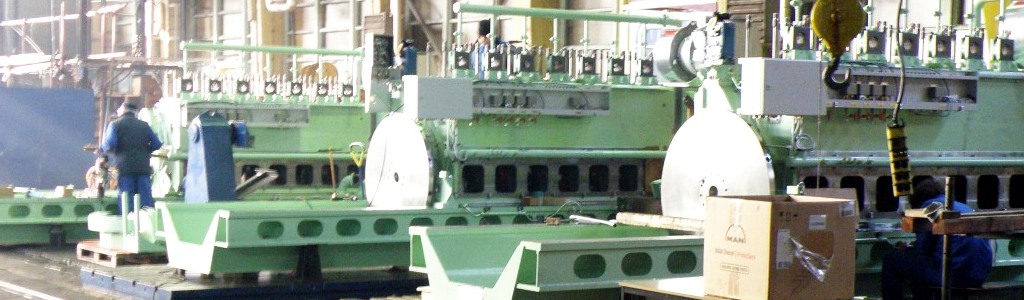
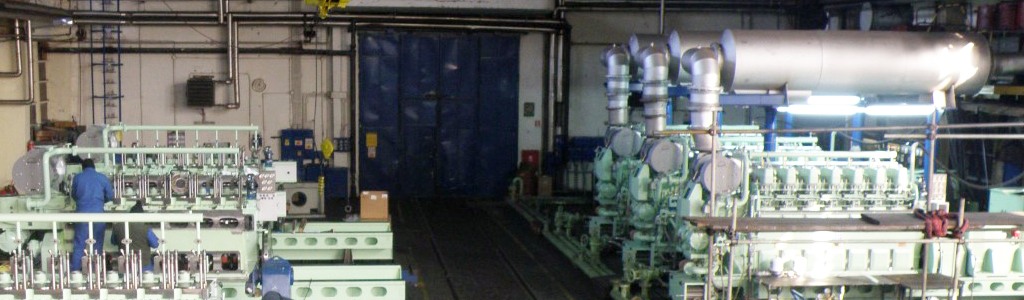
The concrete foundation, code 300945, is a fundamental structural element associated with the installation of the MAN L21/31 engine, providing the stable and load-bearing base required to support the engine and transmit its operational forces safely into the surrounding structure. A properly designed concrete foundation must accommodate the engine's static weight as well as dynamic forces arising from reciprocating and rotating components, combustion-related loading, vibration, and operating torque. Depending on the installation, the foundation may incorporate anchor bolts, embedded steel elements, mounting plates, grouting materials, and accurately prepared supporting surfaces to ensure correct positioning and alignment of the engine. Adequate structural strength, stiffness, dimensional accuracy, vibration characteristics, and compatibility with the engine's mounting arrangement are essential for preventing excessive movement, misalignment, settlement, and damage to associated equipment. During inspection and maintenance, the foundation should be checked for cracking, deterioration of concrete or grout, movement of anchor points, corrosion of embedded components, and changes in engine alignment. By providing a rigid and dependable supporting structure, the concrete foundation contributes to effective load distribution, controlled vibration, safe engine operation, and the long-term mechanical reliability of the MAN L21/31 installation.
The holding down bolt, code 101999, is a highly important structural fastening component used in the installation of the MAN L21/31 engine to secure the engine frame or associated mounting structure to its supporting foundation. Its primary function is to maintain a strong and stable connection between the engine and its foundation while resisting operational forces generated by engine vibration, dynamic loading, torque reactions, and thermal expansion. Correct bolt dimensions, material strength, anchoring arrangement, installation alignment, and specified tightening preload are essential for maintaining secure mounting conditions and preventing unwanted movement or loosening during operation. Depending on the installation design, the holding down bolt may work together with foundation plates, chocks, washers, nuts, and other mounting components to ensure effective transmission of mechanical loads into the supporting structure. During maintenance and overhaul, the bolt and its associated fastening elements should be inspected for corrosion, thread damage, elongation, cracking, loss of preload, and other signs of deterioration. By maintaining secure engine anchoring and supporting accurate alignment, the holding down bolt contributes to reduced vibration, structural stability, operational safety, and the long-term reliability of the MAN L21/31 engine.
The filling piece, code 101977, is a precisely dimensioned component of the MAN L21/31 engine designed to occupy a defined space within an assembly and thereby provide the required support, spacing, positioning, or load distribution between associated components. Depending on its particular installation location, the filling piece may compensate for a designed gap, establish the correct relative position of adjoining parts, provide a stable contact surface, or help transfer mechanical forces through the assembly. Dimensional accuracy, surface condition, material strength, and correct positioning are particularly important because an incorrectly fitted or damaged filling piece can alter clearances, alignment, contact patterns, or load distribution. During maintenance and overhaul, the component and its mating surfaces should therefore be inspected for wear, deformation, corrosion, fretting, surface damage, and dimensional deviations before reassembly. By maintaining the specified geometry and mechanical relationship between associated parts, the filling piece contributes to accurate assembly, structural stability, reduced unwanted movement, reliable load transfer, and the dependable long-term operation of the MAN L21/31 engine.
The joint ring K 43545 is an important sealing component designed for the screw plug K 43544 within the throttle-type non-return valve K 43537 of the Adriadiesel/Jugoturbina/Zgoda/Sulzer ZV40/48 engine starting-air system. Its primary function is to provide a reliable seal between the screw plug and its corresponding seating surface, preventing compressed-air leakage through the threaded closure and helping maintain the required pressure conditions within the valve assembly. The effectiveness of the joint ring depends on its material properties, dimensional accuracy, surface condition, and correct compression during installation, since inadequate sealing can lead to pressure losses, reduced starting-system efficiency, and unnecessary loading of associated components. During service, the K 43545 joint ring may be exposed to repeated pressure fluctuations, temperature variations, vibration, and long periods of operational readiness, making resistance to deformation, deterioration, and loss of sealing capability particularly important. During maintenance or overhaul, the joint ring should be inspected for flattening, cracking, corrosion, surface damage, or other signs of deterioration and replaced when required by the manufacturer's maintenance instructions. By ensuring effective sealing of the K 43544 screw plug, the K 43545 joint ring contributes to pressure integrity, reduced compressed-air leakage, reliable operation of the K 43537 throttle-type non-return valve, and dependable long-term performance of the ZV40/48 starting-air system.
The screw plug K 43544 is a threaded closure component used in the throttle-type non-return valve K 43537 of the Adriadiesel/Jugoturbina/Zgoda/Sulzer ZV40/48 engine starting-air system. Its primary function is to close and seal a designated threaded opening in the valve housing, helping maintain pressure integrity and preventing unwanted leakage of compressed air during starting-system operation. Depending on the valve's internal arrangement, the screw plug may also provide access to internal components for assembly, inspection, or maintenance while ensuring secure closure during normal service. Precise thread geometry, correct seating surfaces, suitable material strength, and compatibility with the associated joint ring are important for maintaining a reliable seal under repeated pressure cycles, vibration, and temperature variations. During maintenance or overhaul, the K 43544 screw plug should be examined for damaged threads, corrosion, deformation, worn sealing surfaces, and signs of leakage, while its installation should follow the manufacturer's specified tightening requirements. By providing secure threaded closure and supporting effective pressure sealing, the K 43544 screw plug contributes to the integrity of the K 43537 valve assembly, controlled starting-air operation, reduced compressed-air losses, and dependable starting performance of the ZV40/48 engine.
The lock nut K 43542 is an important fastening and securing component of the throttle-type non-return valve K 43537 used in the starting-air system of the Adriadiesel/Jugoturbina/Zgoda/Sulzer ZV40/48 engine. Its primary function is to secure the associated threaded component or adjustment in the required position, helping prevent unintended loosening or displacement caused by vibration, repeated pressure cycles, and mechanical loading during engine operation. Although relatively small, the lock nut plays an important role in maintaining the mechanical integrity, correct alignment, and consistent operating characteristics of the valve assembly. Accurate thread dimensions, suitable material strength, and reliable locking performance are essential because loosening or thread damage could alter the position of connected components and potentially compromise the valve's throttling or non-return function. During maintenance or overhaul, the K 43542 lock nut should be inspected for thread wear, deformation, corrosion, cracking, and signs of loosening, while installation should follow the manufacturer's specified tightening and locking procedures. By maintaining secure fastening and preventing unwanted movement of associated components, the K 43542 lock nut contributes to stable valve operation, dependable starting-air control, reduced mechanical wear, and reliable long-term performance of the ZV40/48 engine.
The casing 156971 is a structural enclosure and supporting component used within the MAN L21/31 engine, designed to provide mechanical protection, accurate positioning, and a stable interface for the associated internal or adjoining components. Depending on its position within the engine assembly, the casing may also incorporate accurately machined bores, mounting faces, internal spaces, or connection points required for the proper operation of the corresponding system. Its dimensional stability and structural integrity are particularly important because deformation, cracking, excessive wear, or damage to mounting and sealing surfaces can affect component alignment, clearances, sealing, and overall system reliability. During engine operation, the 156971 casing may be exposed to vibration, mechanical loads, temperature variations, and prolonged service conditions, making correct installation and periodic inspection essential. During overhaul, particular attention should be given to mounting surfaces, bores, threaded connections, sealing areas, and structural sections for signs of wear, corrosion, cracking, distortion, or fretting. By maintaining a stable and accurately dimensioned structural environment for the associated components, the 156971 casing contributes to correct assembly alignment, reliable system operation, reduced mechanical wear, and dependable long-term performance of the MAN L21/31 engine.
The welded support 256967 is a structural component of the MAN L21/31 engine designed to provide a strong and stable mounting or supporting interface for the associated engine equipment or assembly. Its welded construction allows individual structural sections to form a rigid unit capable of transmitting mechanical loads into the surrounding engine structure while maintaining the required position and alignment of the supported components. Because the support operates in an environment characterized by continuous engine vibration, cyclic loading, temperature changes, and extended service periods, the quality and integrity of the welded joints are particularly important for long-term reliability. Correct geometry and alignment are also essential, since distortion or damage can introduce unwanted stresses into mounted components and their connections. During overhaul, the 256967 welded support should be inspected carefully for cracking around welds, corrosion, deformation, fretting at mounting points, damaged fastening areas, or other indications of fatigue. By providing a rigid and dependable structural foundation, the 256967 welded support contributes to correct equipment positioning, controlled load transfer, reduced vibration-related movement, and reliable operation of the MAN L21/31 engine.
The support 356967 is an important structural and positioning component used within the MAN L21/31 engine, where it provides stable mechanical support for the associated assembly and helps maintain the correct position and alignment of connected components during operation. Although supports are often relatively simple in appearance, their dimensional accuracy, rigidity, mounting geometry, and condition are important because unwanted movement or misalignment can increase vibration, create uneven loading, and accelerate wear of neighboring parts. In the demanding environment of a medium-speed diesel engine, the 356967 support may be exposed to continuous vibration, cyclic mechanical loads, temperature variations, and prolonged operating periods, requiring dependable mechanical strength and dimensional stability. During maintenance or overhaul, its mounting surfaces, fastening points, contact areas, and overall geometry should be inspected for cracks, deformation, corrosion, fretting, or other signs of deterioration. By providing a secure and accurately positioned structural interface, the 356967 support contributes to stable component installation, reduced vibration and mechanical stress, and dependable long-term operation of the MAN L21/31 engine.
The valve cone K 43540 is a precision flow-control and sealing component of the throttle-type non-return valve K 43537 used in the starting-air system of the Adriadiesel/Jugoturbina/Zgoda/Sulzer ZV40/48 engine. Working together with its corresponding valve seat and spindle mechanism, the cone controls the effective flow area as the valve opens and closes, while also providing the sealing action required to prevent undesirable reverse flow. The geometry, concentricity, seating surface, and surface finish of the K 43540 are therefore particularly important, as even localized wear, deposits, pitting, or deformation can reduce sealing effectiveness and alter the intended flow characteristics of the valve. During repeated engine starts, the valve cone is exposed to compressed-air pressure forces, cyclic seating impacts, mechanical contact, vibration, and possible contamination carried by the air system, requiring dependable wear resistance and dimensional stability. During overhaul, the cone and corresponding seat should be carefully inspected for scoring, erosion, corrosion, deposits, uneven contact patterns, or other damage affecting tightness or free movement. By providing controlled flow regulation together with reliable sealing against reverse flow, the K 43540 valve cone contributes to stable operation of the K 43537 assembly, dependable starting-air control, protection of associated components, and reliable starting performance of the ZV40/48 engine.