

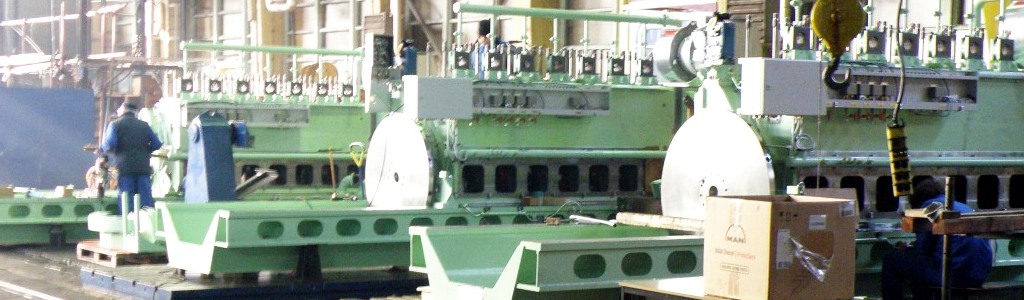
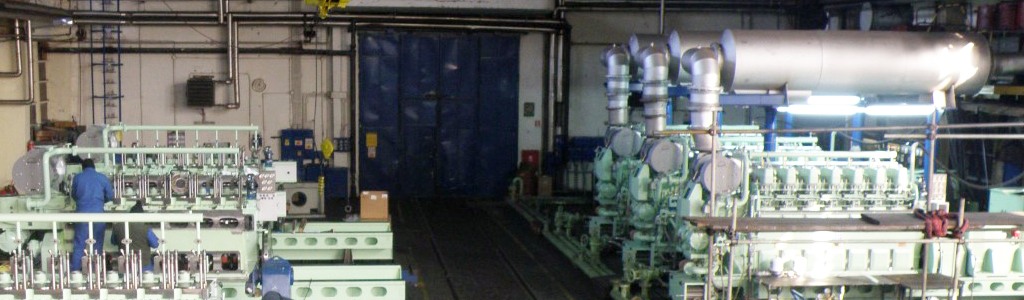
The measuring points, code 300715, represent designated reference locations on the MAN L21/31 engine where dimensional, alignment, clearance, wear, or other condition-related measurements can be taken during assembly, inspection, maintenance, and overhaul. Clearly defined measuring points are important because they allow technicians to perform repeatable measurements and compare actual values with specified tolerances, previous inspection records, or expected wear limits. Depending on their location, measurements may help assess the condition and geometry of structural components, bearing arrangements, running clearances, or other critical engine areas where dimensional changes can influence reliability. Correct measuring instruments, consistent measurement procedures, clean reference surfaces, and accurate recording of results are essential for meaningful condition assessment. By supporting systematic inspection and early identification of wear, deformation, misalignment, or dimensional deviation, the specified measuring points contribute to effective preventive maintenance, informed overhaul decisions, and the long-term reliability of the MAN L21/31 engine.
The bolt K 33209 is a precision mechanical fastener designed for the corresponding assembly of the Adriadiesel/Jugoturbina/Zgoda/Sulzer ZV40/48 engine and works as part of a secure connection between associated engine components. Its primary purpose is to generate and maintain the required clamping force so that the connected parts remain correctly positioned under the vibration, cyclic loading, and changing thermal conditions encountered during heavy-duty engine operation. Reliable performance depends on accurate thread geometry, suitable material strength, dimensional precision, correct seating surfaces, and application of the specified tightening procedure, since inadequate preload or deterioration of the bolt can allow movement between joined components and accelerate wear or fatigue. During overhaul, the K 33209 bolt should be inspected for damaged threads, corrosion, deformation, surface defects, signs of fatigue, or other conditions that could affect its mechanical integrity, together with the corresponding nut and mating surfaces. By providing dependable fastening and maintaining the designed clamping relationship between components, the K 33209 bolt contributes to structural stability, reduced unwanted movement, reliable assembly performance, and long service life of the ZV40/48 engine.
The nut K 33208 is a precision fastening component used within the corresponding assembly of the Adriadiesel/Jugoturbina/Zgoda/Sulzer ZV40/48 engine, where it provides the clamping force necessary to securely retain associated components in their specified positions. Although a nut may appear to be a relatively simple engine part, its dimensional accuracy, thread condition, material strength, and correct tightening are important for maintaining the integrity of a heavily loaded diesel-engine assembly. During operation, the fastening can be subjected to vibration, cyclic mechanical forces, temperature variations, and long-term service stresses that may influence preload and joint stability. The K 33208 must therefore provide reliable thread engagement and appropriate load transfer without excessive deformation, thread damage, or unintended loosening. During maintenance and overhaul, both the nut and its mating threaded component should be carefully inspected for wear, corrosion, deformation, damaged threads, or other abnormalities that could compromise fastening reliability. By maintaining a secure and correctly loaded mechanical connection, the K 33208 nut contributes to assembly stability, accurate component positioning, reduced risk of mechanical damage, and dependable long-term operation of the ZV40/48 engine.
The self-locking nut K 32383 is a specialized fastening and securing component designed for the worm gear K 32326 within the associated mechanism of the Adriadiesel/Jugoturbina/Zgoda/Sulzer ZV40/48 engine. Its primary function is to maintain a secure threaded connection and retain the worm gear in its specified position while resisting unintended loosening caused by vibration, repeated loading, and movement during operation. Reliable locking is particularly important in worm-gear mechanisms because excessive axial movement or loss of correct positioning can affect gear engagement, increase mechanical wear, and potentially compromise the operation of neighboring components. Accurate thread geometry, suitable mechanical strength, dimensional stability, and dependable self-locking characteristics are therefore essential for long-term service. During overhaul or maintenance, the K 32383 nut, its mating threads, the K 32326 worm gear, and associated contact surfaces should be inspected for wear, deformation, or damage, and the fastening should be restored according to the specified assembly requirements. By maintaining secure positioning of the worm gear, the K 32383 self-locking nut contributes to stable gear engagement, reduced risk of loosening, reliable mechanical operation, and long-term durability of the ZV40/48 engine mechanism.
The nut, code 199924, is an important fastening component used in the MAN L21/31 engine to secure a corresponding threaded connection and maintain the required clamping force between associated engine parts. Although mechanically simple in appearance, a nut used in a medium-speed diesel engine can be exposed to substantial preload, vibration, cyclic loading, temperature changes, and demanding environmental conditions, making appropriate material strength, thread accuracy, dimensional stability, and surface condition essential for reliable service. Correct tightening according to the specified procedure is particularly important for establishing the intended preload without overstressing the nut, mating thread, or connected components, while suitable locking or securing arrangements may be applied where required to prevent loosening during operation. During maintenance, the nut and its threads should be inspected for wear, deformation, corrosion, cracking, or other damage before reuse. By maintaining a secure and correctly loaded threaded connection, the nut contributes to structural integrity, safe engine operation, reduced maintenance risk, and the long-term reliability of the MAN L21/31 engine.
The tierod, code 102766, is a highly loaded structural fastening component of the MAN L21/31 engine that connects and clamps major engine structures together while maintaining the specified preload required for structural stability during operation. It must withstand substantial tensile forces generated by combustion pressure as well as cyclic mechanical loading, vibration, and thermal expansion without allowing excessive movement, separation, or loss of alignment between the connected components. High-strength material properties, accurate machining of the threads and contact areas, correct installation, and controlled tightening are particularly important because the tierod preload directly influences the distribution of forces throughout the engine structure. Periodic inspection should include checking the threads, contact surfaces, and the tierod itself for corrosion, mechanical damage, elongation, fatigue cracking, or other signs of deterioration. By maintaining secure clamping and structural rigidity under demanding operating conditions, the tierod contributes significantly to correct engine alignment, mechanical durability, operational safety, and the long service life of the MAN L21/31 engine.
The guide bearing cap, code 302986, is a precision-machined structural component of the MAN L21/31 engine designed to secure and stabilize the associated guide bearing while maintaining the accurate positioning and alignment required for reliable engine operation. During service, the cap and bearing arrangement may be subjected to substantial mechanical loads, vibration, cyclic stresses, and temperature variations, making dimensional accuracy, rigidity, and correct installation particularly important. Precisely machined seating and contact surfaces help distribute loads uniformly and maintain the specified bearing geometry, thereby reducing the risk of excessive movement, uneven wear, or deterioration of associated components. During maintenance and overhaul, the guide bearing cap should be carefully inspected for wear, fretting, deformation, cracking, corrosion, and damage to its machined surfaces or fastening points. By securely retaining the guide bearing and preserving correct alignment, the guide bearing cap contributes to stable mechanical operation, reduced component wear, effective maintenance, and the long-term reliability of the MAN L21/31 engine.
The self-locking nut K 32381 is an important securing component used in the barring-engine mechanism of the Adriadiesel/Jugoturbina/Zgoda/Sulzer ZV40/48 engine. The barring system is used to rotate the engine slowly during inspection, maintenance, preparation for operation, and other service procedures, making secure positioning of its mechanical components particularly important. The K 32381 nut provides a dependable threaded connection while incorporating a locking function intended to resist loosening under vibration, repeated engagement, mechanical loading, and movement of the barring mechanism. Maintaining correct fastening helps preserve alignment and prevents unwanted displacement that could interfere with smooth engagement or increase wear on neighboring components. The nut and its mating threads should therefore be inspected during appropriate maintenance for wear, thread damage, deformation, or deterioration of the locking function, with replacement where its secure locking performance can no longer be assured. By maintaining a reliable fastening within the barring-engine assembly, the K 32381 self-locking nut contributes to controlled barring operation, mechanical safety, reduced risk of component damage, and dependable servicing of the ZV40/48 engine.
The self-locking nut K 32380 is a specialized fastening component designed for the worm K 32323 within the associated mechanism of the Adriadiesel/Jugoturbina/Zgoda/Sulzer ZV40/48 engine. Its principal function is to securely retain the worm and maintain the required fastening condition while resisting unintended loosening caused by vibration, repeated mechanical loading, and operational movement. This locking capability is particularly important in heavy-duty engine mechanisms, where loss of fastening integrity could lead to excessive axial movement, misalignment, irregular engagement, accelerated wear, or damage to related components. Accurate thread geometry, suitable mechanical strength, and reliable self-locking characteristics are therefore essential for the K 32380 to perform consistently throughout its intended service period. During maintenance or overhaul, the nut, corresponding threads, worm, and associated contact surfaces should be inspected carefully, and the fastening arrangement should be restored according to the specified assembly requirements. By helping maintain secure positioning of the worm K 32323, the K 32380 self-locking nut contributes to reliable mechanical engagement, stable operation, and long-term durability of the associated ZV40/48 engine mechanism.
The spring K 32374 is a precision resilient component designed to work with the bearing insert K 32332 in the Adriadiesel/Jugoturbina/Zgoda/Sulzer ZV40/48 engine. Its primary function is to provide a controlled elastic force that helps maintain the bearing insert in its intended operating position and supports stable contact within the associated assembly. Because the spring is repeatedly subjected to compression or deflection, vibration, cyclic mechanical loads, and changing operating conditions, it must retain its designed elasticity and dimensional characteristics throughout extended service. Correct spring force is particularly important, as loss of tension, deformation, fatigue cracking, or corrosion could affect the positioning and dependable function of the bearing insert. During overhaul, the K 32374 spring should therefore be inspected together with the K 32332 insert and neighboring components for signs of wear, damage, or loss of resilience. By maintaining controlled spring pressure and reliable positioning of the bearing insert, the K 32374 contributes to stable mechanical operation, reduced wear, and dependable long-term performance of the ZV40/48 engine.