

The locking spring washer, code 515151, is a resilient fastening component used in the MAN L21/31 engine to help secure bolted connections against loosening caused by vibration, cyclic loads, thermal expansion, and other dynamic operating influences. Its spring characteristics allow it to exert an elastic reaction within the fastening arrangement, helping maintain contact and supporting the required clamping effect when the connection is correctly assembled. Because medium-speed diesel engines operate under continuous vibration and changing mechanical and thermal loads, the condition, elasticity, dimensions, and material strength of such a washer are important for dependable fastening performance. Correct positioning and tightening according to the specified assembly procedure are essential, while damaged, permanently deformed, cracked, heavily corroded, or fatigued washers should not be relied upon to provide their intended securing function. By supporting the stability of critical bolted connections, the locking spring washer helps reduce the possibility of unintended loosening, improves mechanical security, and contributes to the safe and reliable long-term operation of the MAN L21/31 engine.
The lock washer, code 100100, is an important fastening and securing component used in the MAN L21/31 engine to help maintain the integrity of bolted or threaded connections under demanding operating conditions. Its primary purpose is to reduce the risk of unintended loosening caused by engine vibration, cyclic mechanical loading, temperature variations, and repeated operational stresses. Depending on the particular fastening arrangement, the lock washer provides an additional securing effect between the fastener and the adjoining surface, helping preserve the required clamping force and stability of the connection. Correct dimensions, suitable material properties, proper surface condition, and installation in accordance with the specified assembly procedure are essential for reliable performance. During maintenance, the washer should be inspected for deformation, cracking, corrosion, excessive wear, or loss of its locking capability before reuse. By helping prevent fastener loosening and maintaining secure mechanical connections, the lock washer contributes to operational safety, reduced maintenance risk, and the long-term reliability of the MAN L21/31 engine.
The stopper ring K 42111 is a precision retaining and positioning component designed for the camshaft assembly of the Adriadiesel/Jugoturbina/Zgoda/Sulzer ZV40/48 engine. Its principal function is to help maintain the camshaft or an associated component in its specified axial position, restricting unwanted displacement and preserving the correct mechanical relationship between the camshaft, bearings, drive components, and neighboring parts. Although relatively simple in form, the stopper ring performs an important role because excessive axial movement can affect alignment, bearing conditions, gear engagement, and ultimately the accuracy and reliability of the camshaft mechanism. The K 42111 must therefore maintain its dimensional integrity and secure seating despite continuous vibration, cyclic mechanical loading, and long periods of engine operation. During overhaul, the stopper ring, its locating groove or seating surface, and the associated camshaft components should be inspected for wear, deformation, cracking, or other damage that could compromise retention. By maintaining controlled axial positioning of the camshaft assembly, the K 42111 stopper ring contributes to accurate alignment, stable camshaft operation, reduced mechanical wear, and dependable long-term performance of the ZV40/48 engine.
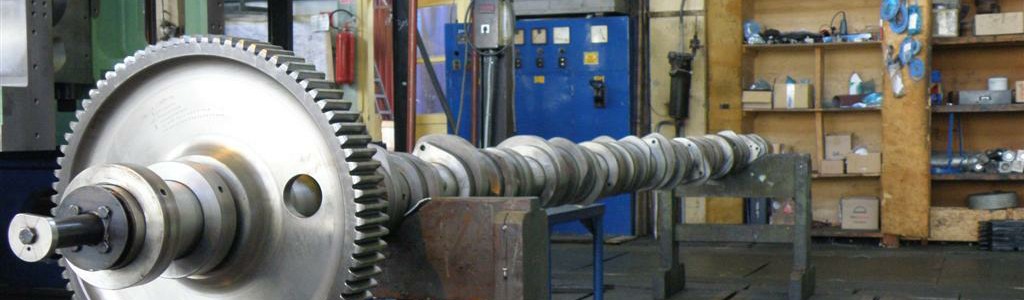
The toothed wheel K 42110 is an important power-transmission and timing component associated with the camshaft of the Adriadiesel/Jugoturbina/Zgoda/Sulzer ZV40/48 engine. Its primary function is to transmit rotational motion through the camshaft drive system while preserving the precise mechanical relationship required for correct synchronization of the camshaft with the engine operating cycle. Accurate tooth profile, pitch, concentricity, alignment, and running clearances are particularly important because progressive tooth wear, incorrect backlash, or misalignment can lead to irregular gear engagement, increased vibration and noise, and deterioration of timing accuracy. The K 42110 toothed wheel must withstand repeated tooth loading, continuous rotation, vibration, and extended heavy-duty service while operating under appropriate lubrication conditions. During maintenance and overhaul, the tooth flanks, bore and mounting surfaces, alignment, backlash, and lubrication condition should be inspected carefully for abnormal wear or damage. By providing accurate and reliable transmission of rotational movement to the camshaft, the K 42110 toothed wheel contributes to precise engine timing, smooth operation, reduced wear of associated drive components, and long-term reliability of the ZV40/48 engine.
The right-hand camshaft K 42104, located on the damper side, is a critical timing and mechanical-control component of the Adriadiesel/Jugoturbina/Zgoda/Sulzer ZV40/48 engine. Its principal function is to convert precisely synchronized rotary motion into the controlled mechanical actions required by the corresponding engine mechanisms, ensuring that these functions occur at the correct stages of the operating cycle. The geometry and angular positioning of the cam profiles, together with shaft straightness, journal dimensions, bearing clearances, and correct alignment with the camshaft drive, are essential for maintaining accurate engine timing and consistent performance. During heavy-duty marine and stationary operation, the K 42104 camshaft is subjected to repeated contact stresses, torsional loads, vibration, bearing forces, and prolonged continuous service, making effective lubrication, wear resistance, and dimensional stability particularly important. During overhaul, the cam profiles, journals, bearing surfaces, drive connections, and lubrication passages should be carefully inspected for wear, scoring, deformation, or other abnormalities. By providing precise and repeatable mechanical control on the damper side, the K 42104 right-hand camshaft contributes to correct engine timing, stable operation, reduced mechanical wear, and dependable long-term performance of the ZV40/48 engine.
The main bearing cap, code 102985, is a precision-machined, highly loaded component of the MAN L21/31 engine that securely retains the main bearing and helps maintain the crankshaft in its specified operating position and alignment. Together with the corresponding bearing housing, the cap forms a rigid support capable of transmitting and distributing the substantial dynamic and combustion-related loads acting through the crankshaft while preserving the bearing geometry and clearances required for reliable lubrication and smooth rotation. Accurate seating surfaces, dimensional stability, correct alignment, and the specified preload of the fastening elements are essential, since even relatively small deviations can influence bearing load distribution, lubricating-oil film formation, crankshaft alignment, vibration, and wear. During inspection and overhaul, the cap, contact surfaces, fastening areas, and associated bearing locations should therefore be checked carefully for fretting, deformation, cracking, wear, corrosion, or other deterioration. By maintaining secure crankshaft support and precise main-bearing alignment, the main bearing cap contributes directly to reliable lubrication, reduced mechanical wear, stable engine operation, and the long-term durability of the MAN L21/31 engine.
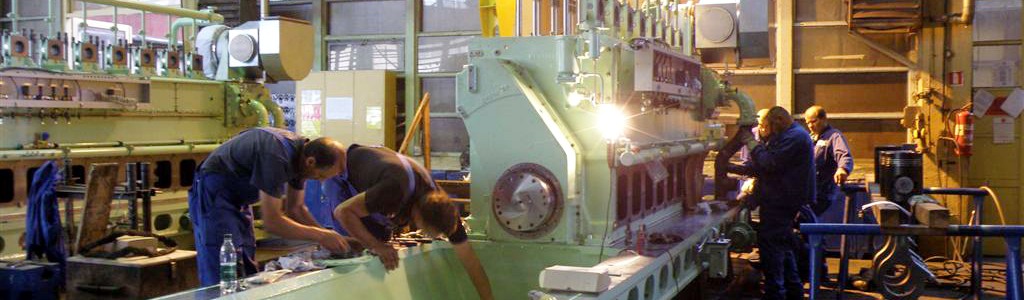
The cylinder crankcase, code 102938, is a major load-bearing structural component of the MAN L21/31 engine that provides the rigid housing and foundation required to support and accurately align the cylinder assemblies, crankshaft, main bearings, and associated mechanical systems. During engine operation, it must withstand substantial combustion forces, cyclic mechanical loads, vibration, and thermal stresses while maintaining the dimensional stability and precise geometry necessary for smooth movement of the rotating and reciprocating components. Accurately machined bearing locations, mounting surfaces, openings, and interfaces are particularly important for correct crankshaft alignment, load distribution, lubrication, assembly, and maintenance. During overhaul, careful inspection for cracks, deformation, corrosion, fretting, wear, and dimensional deviations helps determine whether the crankcase remains suitable for continued service. By providing structural strength and preserving the correct relationship between critical engine components, the cylinder crankcase contributes significantly to mechanical stability, operational safety, efficient performance, and the long service life of the MAN L21/31 engine.
The measuring points, code 300715, represent designated reference locations on the MAN L21/31 engine where dimensional, alignment, clearance, wear, or other condition-related measurements can be taken during assembly, inspection, maintenance, and overhaul. Clearly defined measuring points are important because they allow technicians to perform repeatable measurements and compare actual values with specified tolerances, previous inspection records, or expected wear limits. Depending on their location, measurements may help assess the condition and geometry of structural components, bearing arrangements, running clearances, or other critical engine areas where dimensional changes can influence reliability. Correct measuring instruments, consistent measurement procedures, clean reference surfaces, and accurate recording of results are essential for meaningful condition assessment. By supporting systematic inspection and early identification of wear, deformation, misalignment, or dimensional deviation, the specified measuring points contribute to effective preventive maintenance, informed overhaul decisions, and the long-term reliability of the MAN L21/31 engine.
The bolt K 33209 is a precision mechanical fastener designed for the corresponding assembly of the Adriadiesel/Jugoturbina/Zgoda/Sulzer ZV40/48 engine and works as part of a secure connection between associated engine components. Its primary purpose is to generate and maintain the required clamping force so that the connected parts remain correctly positioned under the vibration, cyclic loading, and changing thermal conditions encountered during heavy-duty engine operation. Reliable performance depends on accurate thread geometry, suitable material strength, dimensional precision, correct seating surfaces, and application of the specified tightening procedure, since inadequate preload or deterioration of the bolt can allow movement between joined components and accelerate wear or fatigue. During overhaul, the K 33209 bolt should be inspected for damaged threads, corrosion, deformation, surface defects, signs of fatigue, or other conditions that could affect its mechanical integrity, together with the corresponding nut and mating surfaces. By providing dependable fastening and maintaining the designed clamping relationship between components, the K 33209 bolt contributes to structural stability, reduced unwanted movement, reliable assembly performance, and long service life of the ZV40/48 engine.
The nut K 33208 is a precision fastening component used within the corresponding assembly of the Adriadiesel/Jugoturbina/Zgoda/Sulzer ZV40/48 engine, where it provides the clamping force necessary to securely retain associated components in their specified positions. Although a nut may appear to be a relatively simple engine part, its dimensional accuracy, thread condition, material strength, and correct tightening are important for maintaining the integrity of a heavily loaded diesel-engine assembly. During operation, the fastening can be subjected to vibration, cyclic mechanical forces, temperature variations, and long-term service stresses that may influence preload and joint stability. The K 33208 must therefore provide reliable thread engagement and appropriate load transfer without excessive deformation, thread damage, or unintended loosening. During maintenance and overhaul, both the nut and its mating threaded component should be carefully inspected for wear, corrosion, deformation, damaged threads, or other abnormalities that could compromise fastening reliability. By maintaining a secure and correctly loaded mechanical connection, the K 33208 nut contributes to assembly stability, accurate component positioning, reduced risk of mechanical damage, and dependable long-term operation of the ZV40/48 engine.