

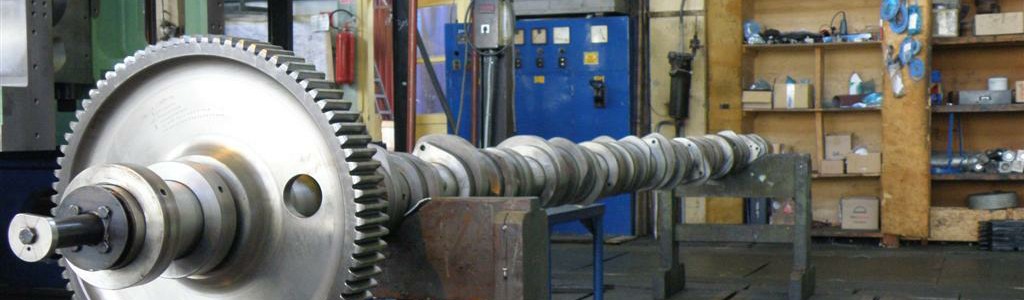
The lapped bearing ring halves K 42611 are precision-finished bearing components designed for the camshaft lapped-bearing arrangement of the Adriadiesel/Jugoturbina/Zgoda/Sulzer ZV40/48 engine. Their carefully finished mating and bearing surfaces are intended to provide accurate contact, alignment, and support for the camshaft while maintaining the controlled running conditions required within the bearing assembly. The lapping process produces closely matched surfaces with a high degree of dimensional and surface accuracy, helping achieve uniform contact and dependable load distribution when the bearing halves are correctly assembled. During engine operation, these components must accommodate continuous camshaft rotation, cyclic bearing loads, vibration, and long-term service while preserving the required geometry and running clearance. Correct pairing and installation of the bearing ring halves, suitable lubrication, and careful inspection are therefore particularly important; wear, scoring, fretting, deformation, or damage to the precision-finished surfaces can adversely affect bearing performance and camshaft alignment. By providing accurately matched support within the camshaft bearing assembly, the K 42611 lapped bearing ring halves contribute to smooth camshaft rotation, controlled bearing loads, reduced wear, precise timing, and dependable long-term operation of the ZV40/48 engine.
The camshaft bearing shell halves K 42601 are precision bearing components designed to support and guide the camshaft of the Adriadiesel/Jugoturbina/Zgoda/Sulzer ZV40/48 engine while allowing smooth rotation under continuous operating loads. Installed as complementary bearing halves around the corresponding camshaft journal, they provide the accurately dimensioned running surface required to maintain correct shaft alignment, distribute bearing loads, and minimize friction between the rotating camshaft and its supporting structure. Because the camshaft is continuously exposed to cyclic forces generated by the valve and fuel-control mechanisms, the condition of its bearings is essential for maintaining stable timing and preventing excessive shaft movement. The K 42601 bearing shell halves therefore require accurate geometry, suitable bearing properties, correct clearances, clean lubrication, and proper installation to achieve reliable service life. During overhaul, the bearing surfaces should be inspected for scoring, wiping, abnormal wear, overheating, contamination, or changes in running clearance, together with the condition of the corresponding camshaft journals. By supporting accurate camshaft rotation and maintaining the required bearing clearances, the K 42601 bearing shell halves contribute to reduced friction, correct camshaft alignment, stable engine timing, and long-term reliability of the ZV40/48 engine.
The valve cam K 42160 is a precision timing and control component mounted on the camshaft of the Adriadiesel/Jugoturbina/Zgoda/Sulzer ZV40/48 engine, where it plays an essential role in controlling the mechanical operation of the corresponding valve mechanism. Its accurately defined cam profile converts camshaft rotation into precisely timed movement, helping ensure that the associated valve opens and closes at the required points of the engine operating cycle and follows the intended lift characteristics. Because valve timing directly influences gas exchange and overall engine performance, the geometry, angular position, surface finish, and dimensional accuracy of the K 42160 are particularly important. During operation, the valve cam is subjected to repeated contact stresses, cyclic loading, friction, vibration, and prolonged heavy-duty service, requiring good wear resistance, correct alignment, and effective lubrication of the associated contact surfaces. During overhaul, the cam profile and mating components should be inspected for wear, pitting, scoring, deformation, or other surface damage that could alter valve motion. By providing accurate and repeatable mechanical control of the valve mechanism, the K 42160 valve cam contributes to correct valve timing, efficient gas exchange, stable engine operation, and dependable long-term performance of the ZV40/48 engine.
The glue, code 195956, is a specialized bonding and securing material intended for particular assembly, maintenance, and repair applications associated with the MAN L21/31 engine. Depending on the specified application, such an adhesive may be used to secure threaded or cylindrical connections, assist in sealing mating surfaces, prevent loosening caused by vibration, or provide additional retention between assembled components. In demanding marine and industrial engine environments, the selected adhesive must maintain the required properties when exposed to temperature variations, vibration, lubricating oil, fuel, moisture, and other operating influences relevant to its installation location. Thorough cleaning and preparation of the surfaces, application of the correct quantity, proper assembly, and observance of the specified curing conditions and time are essential for achieving a dependable bond. The adhesive should always be selected and applied according to the relevant technical and maintenance requirements. When correctly used, the glue can improve connection security, reduce the possibility of leakage or loosening, support efficient maintenance, and contribute to the long-term operational reliability of the MAN L21/31 engine.
The oval flange, code 170901, is a precision-engineered connection component used in the MAN L21/31 engine to establish a secure and leak-resistant interface between piping, fluid-system components, or other associated engine connections. Its oval geometry can provide a compact and practical fastening arrangement where installation space, connection configuration, and reliable sealing are important considerations. During engine operation, the flange and its fastening arrangement may be exposed to internal pressure, vibration, thermal expansion, mechanical loads, and operating media such as lubricating oil, fuel, cooling water, or air, depending on its specific application. Accurate machining of the flange faces and fastening points, correct gasket or sealing-element installation, suitable material properties, and controlled tightening are essential for maintaining alignment and preventing leakage. Regular inspection should include checking the sealing surfaces, fastener locations, and flange body for corrosion, cracking, deformation, erosion, or other damage. By providing a stable and dependable connection, the oval flange supports controlled fluid transfer, effective sealing, safe maintenance, and reliable long-term operation of the MAN L21/31 engine.
The gasket, code 300100, is an important sealing component used in the MAN L21/31 engine to create a reliable and leak-tight joint between adjoining surfaces of engine parts and assemblies. Depending on its particular installation position, the gasket may seal lubricating oil, fuel, cooling water, compressed air, gases, or another operating medium while compensating for small irregularities between the mating surfaces. During service, it can be subjected to pressure fluctuations, vibration, temperature changes, mechanical loading, and continuous contact with the relevant operating fluid, making correct material selection, dimensional accuracy, and installation particularly important. Proper preparation of the sealing surfaces and controlled tightening of the associated fasteners help achieve uniform compression and prevent premature deterioration. During maintenance, the gasket and mating surfaces should be inspected for leakage, damage, deformation, contamination, or other deterioration. By minimizing fluid leakage, contamination, and pressure losses, the gasket contributes to safe engine operation, efficient maintenance, protection of surrounding components, and the long-term reliability of the MAN L21/31 engine.
The fuel cam K 42150 is a precision timing and control component mounted on the camshaft of the Adriadiesel/Jugoturbina/Zgoda/Sulzer ZV40/48 engine and plays an important role in the mechanical control of the fuel-injection process. Its carefully defined cam profile converts camshaft rotation into precisely timed mechanical movement for the associated fuel-injection mechanism, helping ensure that fuel delivery occurs at the required point in the engine operating cycle. The geometry, angular position, surface finish, and dimensional accuracy of the fuel cam are therefore critical, as wear or deformation of the working profile can alter the movement of the associated mechanism and adversely affect injection timing and engine performance. During operation, the K 42150 fuel cam is subjected to repeated contact stresses, cyclic loading, friction, vibration, and long periods of heavy-duty service, making wear resistance, effective lubrication of the associated contact surfaces, and correct alignment particularly important. During overhaul, the cam profile and its mating components should be inspected for wear, pitting, scoring, surface damage, or dimensional deviations. By providing accurate and repeatable mechanical control of the fuel-injection mechanism, the K 42150 fuel cam contributes to correct injection timing, stable combustion, efficient engine operation, and dependable long-term performance of the ZV40/48 engine.
The self-locking nut K 42114 is an important securing component designed for the camshaft assembly of the Adriadiesel/Jugoturbina/Zgoda/Sulzer ZV40/48 engine. Its primary function is to maintain a reliable threaded connection and the required clamping force while resisting unintended loosening caused by continuous engine vibration, cyclic mechanical loading, and repeated operating stresses. Secure fastening is particularly important in the camshaft system because any loss of clamping integrity or component positioning can affect alignment, increase mechanical movement and wear, and potentially influence the accuracy of engine timing. The K 42114 therefore requires precise thread geometry, adequate mechanical strength, dimensional stability, and dependable self-locking characteristics throughout its intended service life. During maintenance or overhaul, the nut and its mating threads should be examined for thread damage, deformation, corrosion, wear, or deterioration of the locking function, and replacement should be considered whenever secure locking can no longer be assured. By maintaining a stable and vibration-resistant fastening within the camshaft assembly, the K 42114 self-locking nut contributes to accurate component positioning, reliable camshaft operation, reduced risk of loosening, and long-term reliability of the ZV40/48 engine.
The fitted bolt K 42113 is a precision fastening and locating component designed for the camshaft assembly of the Adriadiesel/Jugoturbina/Zgoda/Sulzer ZV40/48 engine. Unlike a conventional fastening bolt, a fitted bolt is intended not only to provide secure clamping but also to ensure accurate relative positioning of the connected components through its precisely dimensioned fitted section. This is particularly important in a camshaft assembly, where alignment and angular accuracy directly influence the correct timing and operation of the associated engine mechanisms. During service, the K 42113 fitted bolt must withstand cyclic mechanical loads, vibration, shear forces, and prolonged heavy-duty operation without developing excessive clearance or deformation. Accurate dimensions, correct surface condition, suitable mechanical strength, and proper installation are therefore essential for reliable performance. During overhaul, the bolt, fitted bore, threads, and mating surfaces should be inspected carefully for wear, fretting, deformation, corrosion, or other damage. By combining secure fastening with precise component location, the K 42113 fitted bolt contributes to accurate camshaft alignment, stable timing, reduced unwanted movement, and dependable long-term operation of the ZV40/48 engine.
The glues, code 395956, refer to specialized industrial adhesives and securing compounds specified for particular assembly, maintenance, and repair operations on the MAN L21/31 engine. Depending on the application, these products may be used for thread locking, retaining cylindrical components, sealing threaded or mating connections, securing assembled parts, or providing additional resistance against loosening and leakage. Adhesives intended for engine service must be selected according to the specific application and should provide appropriate resistance to vibration, temperature variations, lubricating oil, fuel, moisture, and other operating media or environmental influences to which the joint may be exposed. Thorough cleaning and preparation of the bonding surfaces, correct application quantity, suitable assembly conditions, and observance of the required curing time are essential for obtaining the intended performance. When correctly selected and applied according to the prescribed procedure, these glues can improve connection security, support effective sealing, reduce maintenance-related problems, and contribute to the dependable and long-term operation of the MAN L21/31 engine.