

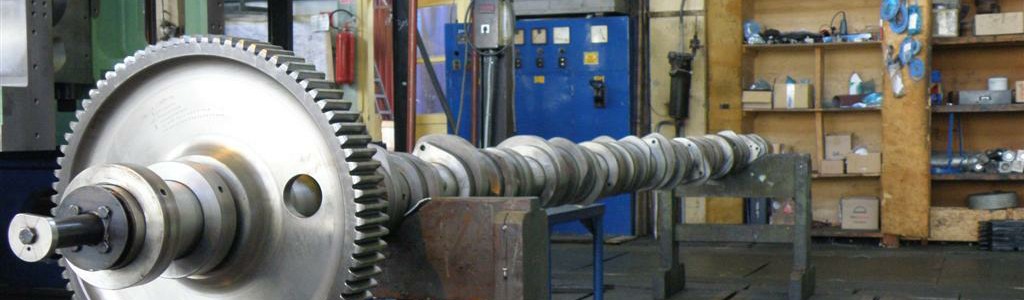
The right-hand camshaft K 42103, positioned on the flywheel side, is a critical timing and control component within the Adriadiesel/Jugoturbina/Zgoda/Sulzer ZV40/48 engine. Its principal function is to transmit precisely timed mechanical movement to the corresponding engine mechanisms by converting synchronized shaft rotation into the required actions through its accurately formed cam profiles. Correct cam geometry, angular positioning, shaft straightness, journal dimensions, bearing clearances, and alignment with the camshaft drive are essential for preserving the designed timing relationship and ensuring consistent operation. In heavy-duty marine and stationary service, the K 42103 camshaft is subjected to repeated contact stresses, torsional loading, vibration, bearing forces, and prolonged continuous operation, making reliable lubrication and careful maintenance particularly important. Inspection of the cam lobes, journals, drive connections, bearing surfaces, and lubrication passages can help detect wear, scoring, deformation, or other abnormalities before they affect engine timing or associated components. By providing accurate and repeatable mechanical control on the flywheel side, the K 42103 right-hand camshaft supports correct engine timing, smooth and stable performance, reduced mechanical wear, and dependable long-term operation of the ZV40/48 engine.
The left-hand camshaft K 42102, located on the damper side, is a major timing and mechanical-control component of the Adriadiesel/Jugoturbina/Zgoda/Sulzer ZV40/48 engine. Working as an integral part of the engine's camshaft system, it converts precisely synchronized rotary motion into controlled mechanical actions required by the corresponding engine mechanisms, ensuring that these functions occur at the correct stages of the operating cycle. The geometry and angular relationship of the cams, together with the accuracy of the journals, shaft alignment, bearing surfaces, and drive connections, are essential for maintaining correct timing and consistent engine performance. Because the camshaft operates continuously under cyclic contact loads, torsional forces, vibration, and bearing loads, high mechanical strength, wear resistance, effective lubrication, and dimensional stability are particularly important. During overhaul and maintenance, the cam profiles, journals, bearing clearances, drive interfaces, and lubrication arrangements should be carefully inspected for wear or damage. By maintaining precise mechanical timing on the damper side of the engine, the K 42102 left-hand camshaft contributes directly to stable engine operation, dependable control of associated functions, reduced risk of abnormal wear, and long-term reliability of the ZV40/48 engine.
The washer K 41146 is a precision fastening and load-distribution component used within the camshaft drive of the Adriadiesel/Jugoturbina/Zgoda/Sulzer ZV40/48 engine. Although relatively simple in design, it performs an important role by distributing fastening forces across the appropriate contact surface, supporting correct axial positioning, and helping maintain the mechanical integrity of the associated camshaft-drive assembly. During engine operation, the component is exposed to continuous vibration, cyclic mechanical loading, and temperature variations, making dimensional accuracy, adequate mechanical strength, and suitable surface condition essential for dependable service. A worn, damaged, or deformed washer can adversely affect fastening security, component positioning, and load distribution, potentially contributing to increased movement and wear of neighboring parts. Inspection of the K 41146 washer and its mating surfaces should therefore form part of appropriate camshaft-drive maintenance. By supporting secure fastening and uniform load transfer, the K 41146 washer contributes to accurate alignment, reduced mechanical wear, and reliable long-term operation of the ZV40/48 camshaft drive.
The main bearing cap, code 102985, is a precision-machined and highly loaded structural component of the MAN L21/31 engine that securely retains the main bearing and helps maintain the crankshaft in its correct operating position. Working together with the corresponding bearing housing, the cap must withstand substantial forces transmitted through the crankshaft while preserving the precise bearing geometry and clearances required for effective lubrication and smooth rotation. Accurate seating surfaces, correct fastening preload, dimensional stability, and proper alignment are essential because even small deviations can influence bearing load distribution, oil-film formation, crankshaft alignment, and component wear. During maintenance, the cap and its associated fastening and bearing surfaces should therefore be carefully inspected for deformation, fretting, cracking, wear, or other deterioration. By securely supporting the crankshaft and maintaining correct main-bearing alignment, the main bearing cap contributes directly to reliable lubrication, reduced mechanical wear, smooth engine operation, and the long-term durability of the MAN L21/31 engine.
The cylinder crankcase, code 302938, is one of the principal structural components of the MAN L21/31 engine, forming a strong housing and supporting structure for the cylinder assemblies, crankshaft, main bearings, and other essential engine components. It is engineered to withstand substantial combustion forces, cyclic mechanical loading, vibration, and thermal stresses while preserving the accurate alignment of rotating and reciprocating parts throughout continuous engine operation. Precision-machined bearing locations, mounting surfaces, openings, and internal interfaces are essential for correct assembly, lubrication, inspection, and maintenance of the engine. Because dimensional stability and structural integrity directly influence crankshaft alignment and load distribution, careful inspection for wear, cracks, deformation, corrosion, and damage to machined surfaces is particularly important during overhaul. Its strength and rigidity therefore play a major role in the reliability, efficiency, mechanical stability, and long-term service life of the MAN L21/31 engine.
The frame, code HP1101, is a fundamental load-bearing structure of the MAN L21/31 engine, providing the rigid mechanical foundation required to support, connect, and accurately align major engine components. During operation, the frame must absorb and distribute substantial forces generated by combustion, rotating and reciprocating masses, vibration, and thermal expansion while maintaining the precise geometry required for reliable engine performance. Its robust construction and accurately machined mounting surfaces provide stable support for associated assemblies and help prevent excessive deformation or misalignment under changing operating loads. Proper inspection of the frame, particularly its mounting surfaces, fastening points, and highly stressed areas, is important during maintenance and overhaul. By maintaining structural rigidity and accurate component alignment, the frame contributes significantly to smooth engine operation, mechanical durability, operational safety, and the long service life of the MAN L21/31 engine.
The left-hand camshaft K 42101, located on the flywheel side, is a major timing and control component of the Adriadiesel/Jugoturbina/Zgoda/Sulzer ZV40/48 engine. Its principal function is to convert precisely synchronized rotary motion into the controlled mechanical actions required by the engine systems associated with the camshaft, ensuring that these functions occur at the correct points in the operating cycle. The geometry and angular position of the individual cams, together with the straightness, bearing surfaces, dimensional accuracy, and surface condition of the shaft, are critical to maintaining correct timing and consistent engine performance. During operation, the camshaft is exposed to repeated contact loads, torsional forces, bearing loads, vibration, and long periods of continuous service, requiring high mechanical strength, wear resistance, effective lubrication, and precise alignment. Regular inspection of cam profiles, journals, drive connections, lubrication passages, and associated components is important for detecting wear or damage before timing accuracy is affected. By providing precise and repeatable mechanical control on the flywheel side of the engine, the K 42101 left-hand camshaft contributes directly to correct engine timing, stable performance, operational reliability, and the long service life of the ZV40/48 engine.
The washer K 41146 is a precision fastening and load-distribution component used within the camshaft drive of the Adriadiesel/Jugoturbina/Zgoda/Sulzer ZV40/48 engine. Although relatively simple in appearance, the washer performs an important mechanical function by distributing fastening forces over the appropriate contact surface, supporting correct component positioning, and helping maintain the integrity of the associated bolted or shaft-mounted assembly. During engine operation, camshaft-drive components are subjected to continuous vibration, cyclic loading, and changing thermal conditions, making reliable fastening and correct axial positioning particularly important. The K 41146 washer must therefore have accurate dimensions, suitable mechanical strength, and appropriate surface characteristics to withstand repeated loading without excessive deformation or wear. Inspection of the washer and its mating surfaces during maintenance can help identify damage, fretting, deformation, or other conditions that could compromise the fastening arrangement. By supporting secure assembly and uniform load distribution, the K 41146 washer contributes to accurate camshaft-drive alignment, reduced mechanical wear, and reliable long-term operation of the ZV40/48 engine.
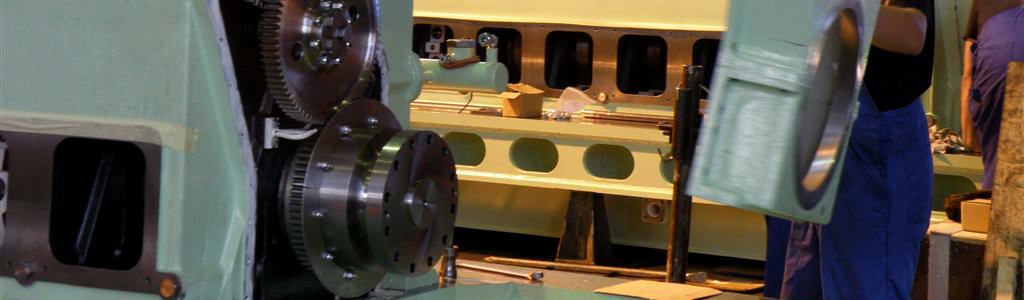
The cover K 41142 is an important protective and enclosing component for the camshaft drive of the Adriadiesel/Jugoturbina/Zgoda/Sulzer ZV40/48 engine. Its primary function is to protect the internal gear-drive components from contamination and external mechanical influences while helping retain the appropriate lubrication environment required for reliable operation of the camshaft drive. The cover also provides a secure boundary around moving components, contributing to operational safety and maintaining the integrity of the complete drive assembly. Accurate machining of mounting and sealing surfaces is important to ensure correct alignment, reliable fastening, and effective sealing against lubricant leakage or the ingress of dirt and foreign particles. Because the component is exposed to engine vibration, temperature variations, and long-term service conditions, dimensional stability and mechanical durability are essential. Correct installation and inspection of the K 41142 cover, including its fastening and sealing areas, help preserve the condition of the internal camshaft-drive components and contribute to reliable engine timing, reduced maintenance requirements, and dependable long-term operation of the ZV40/48 engine.
The round seal ring, code 100100, is a sealing element used in the MAN L21/31 engine to prevent unwanted passage of fluids or gases between adjoining components and to maintain the required tightness of the relevant engine system. Its circular form allows the ring to provide continuous sealing around the connection, with compression between mating surfaces creating the barrier necessary to retain the operating medium. Depending on its installation position, it may be exposed to lubricating oil, fuel, cooling water, compressed air, temperature fluctuations, pressure changes, vibration, and mechanical movement. For this reason, the correct dimensions, material compatibility, surface condition, and installation procedure are essential for preventing premature wear, deformation, hardening, or loss of sealing performance. A correctly installed round seal ring helps minimize leakage and contamination, protects associated engine components, supports efficient maintenance, and contributes to the long-term reliability and operational safety of the MAN L21/31 engine.